Table of Contents
ToggleWhich Fire Service Logbooks Does a Commercial Building Need?
Quick Answer: A commercial building needs fire service logbooks and maintenance records that match its installed fire protection systems and applicable requirements. AS 1851 covers routine servicing of many fire protection systems, including fire detection, sprinklers, hydrants, fire pumps and portable extinguishers. Emergency and exit lighting is generally maintained under AS/NZS 2293.2. The correct combination depends on the building’s equipment, maintenance obligations and applicable standards.
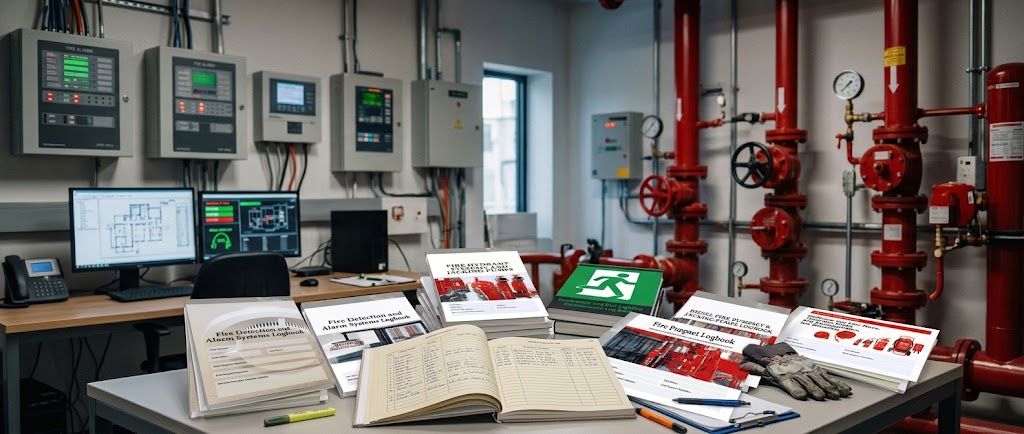
Commercial buildings rely on different fire protection systems to detect fires, support evacuation, control fire spread and provide firefighting equipment.
Each installed system may have specific inspection, testing, maintenance and record-keeping requirements.
For fire protection contractors, electrical contractors, facility managers and building owners, choosing the correct fire service logbooks helps maintain organised service records and track defects and corrective actions.
However, not every commercial building needs the same logbooks.
A small retail premises with fire extinguishers, emergency lighting and a fire detection system may have different maintenance records from a warehouse with sprinklers, fire pumps, hydrants and smoke control systems.
This guide explains how to select appropriate fire safety logbooks for Australian commercial buildings.
1. Why Are Fire Service Logbooks Important?
Fire service logbooks provide a structured way to document routine inspections, testing, maintenance and identified defects.
Depending on the system and applicable requirements, records may include:
- Inspection and service dates.
- Equipment or system identification.
- Test results and observations.
- Defects and nonconformances.
- Corrective actions and repairs.
- Technician or service provider details.
- Follow-up maintenance requirements.
These records help building owners and contractors maintain a service history and identify outstanding maintenance issues.
They can also support regulatory inspections, maintenance reviews and annual fire safety reporting where applicable.
Important: Completing a logbook does not automatically establish that a building or system is compliant. The required inspection, testing, maintenance and corrective actions must also be performed appropriately.
2. Which Australian Standards Apply to Fire Service Logbooks?
Different fire protection systems are maintained under different Australian Standards.
AS 1851 – Routine Service of Fire Protection Systems and Equipment
AS 1851 is a key Australian Standard for routine servicing of many fire protection systems and equipment.
AS 1851—2012 includes requirements for systems such as:
- Automatic fire sprinkler systems.
- Fire hydrant systems.
- Fire hose reels.
- Fire detection and alarm systems.
- Fire pumpsets.
- Portable fire extinguishers and fire blankets.
- Passive fire and smoke systems.
- Mechanical fire and smoke control systems.
The relevant sections establish system-specific routine service activities and record-keeping requirements.
The applicable edition must be determined from the building’s regulatory obligations, maintenance documentation and relevant jurisdictional requirements.
AS/NZS 2293.2 – Emergency Evacuation Lighting
Emergency and exit lighting generally has separate routine inspection and maintenance requirements under AS/NZS 2293.2.
These records may include emergency lighting test results, defects, repairs and other maintenance information.
An AS 1851 logbook should not automatically be treated as a replacement for the applicable emergency lighting maintenance records.
AS 3745 – Planning for Emergencies in Facilities
AS 3745 addresses emergency planning in facilities.
Depending on the facility’s requirements, relevant records may include emergency planning activities, training, evacuation exercises and associated documentation.
These records serve a different purpose from equipment maintenance records.
Confirm the Applicable Requirements
The latest published edition of a standard is not necessarily the edition legally applicable to every existing building.
Building owners and contractors should confirm the requirements that apply to the specific site, including relevant legislation, adopted standards and building documentation.
3. Which Logbook Does Each Fire Protection System Need?
The following table provides a practical guide to matching common fire protection systems with suitable maintenance records.
| Installed System | Relevant Maintenance Standard | Logbook or Record Type |
|---|---|---|
| Fire detection and alarm systems | AS 1851, Section 6 | Fire Detection & Alarm Systems Logbook |
| Automatic sprinkler systems | AS 1851, Section 2 | Sprinkler System Logbook |
| Fire hydrant systems | AS 1851, Section 4 | Fire Hydrant Maintenance Records |
| Fire hose reels | AS 1851, Section 9 | Routine Service Logbook |
| Portable fire extinguishers and fire blankets | AS 1851, Section 10 | Routine Service Logbook |
| Fire pumpsets | AS 1851, Section 3 | Diesel or Electric Fire Pumpset Logbook |
| Mechanical fire and smoke control systems | AS 1851, Section 13 | Mechanical Services Logbook |
| Passive fire and smoke systems | AS 1851, Section 12 | Passive Fire Logbook |
| Emergency and exit lighting | AS/NZS 2293.2 | Emergency Lighting Maintenance Records |
| Emergency planning activities | AS 3745 and applicable requirements | Emergency Planning Records |
The table is a selection guide, not a universal legal requirement to purchase a separate physical book for every system.
The required records depend on the equipment installed and the applicable maintenance obligations.
4. Fire Detection and Alarm Systems Logbook
Fire detection and alarm systems help identify fire conditions and provide warning or control functions.
Routine servicing may involve checking relevant system components, functions and operating conditions.
Depending on the installed system and applicable requirements, records may cover:
- Fire indicator panel inspections.
- Detection and alarm testing.
- System faults and defects.
- Alarm and control functions.
- Corrective actions.
- Periodic inspection and testing results.
Fire Factory Australia’s Fire Detection & Alarm Systems Logbook is designed to support structured records for relevant routine service activities.
The correct record format should match the system and applicable maintenance requirements.
5. Sprinkler System Logbooks
Automatic sprinkler systems require routine servicing and maintenance records appropriate to the installed system.
Depending on the system type, records may include:
- Water supply and pressure observations.
- Alarm valve checks.
- Relevant flow and drain tests.
- Component condition.
- System defects and corrective actions.
- Required periodic inspection and testing results.
Different sprinkler configurations can have different maintenance requirements.
Wet Pipe Sprinkler Systems
Wet pipe sprinkler systems are commonly installed in commercial buildings where the pipework remains filled with water under normal conditions.
A Wet Pipe Sprinkler Logbook can help organise the relevant routine service records.
Dry, Pre-Action and Deluge Systems
Dry, pre-action and deluge systems have different operating arrangements and may require additional system-specific information.
A dedicated logbook can provide appropriate fields for the relevant tests and observations.
Selecting a sprinkler logbook should begin with identifying the actual sprinkler system type.
6. Fire Pumpset Logbooks
Fire pumpsets may form part of a building’s sprinkler or hydrant water supply arrangement.
Routine servicing requirements depend on the pumpset type, configuration and applicable standard.
Records may include:
- Pump operating checks.
- Pressure and flow observations.
- Starting and stopping functions.
- Relevant controller indications.
- Battery or power supply checks.
- Fuel system checks for diesel pumpsets.
- Defects and corrective actions.
Fire Factory Australia offers logbook formats for diesel and electric fire pumpsets.
Selecting a system-specific logbook can help technicians record the information relevant to the installed equipment.
7. Portable Fire Extinguisher, Fire Hose Reel and Fire Blanket Records
Many commercial buildings have portable fire extinguishers and may also have fire hose reels or fire blankets.
Routine servicing records should identify the equipment and document the applicable inspection and maintenance activities.
Depending on the equipment, records may include:
- Equipment identification and location.
- Inspection date.
- General condition.
- Relevant service observations.
- Defects or replacement requirements.
- Corrective actions.
- Technician details.
Fire Factory Australia’s Routine Service Logbook is designed for recording servicing of portable fire extinguishers, fire blankets, fire hose reels and relevant lay-flat hose equipment.
A combined format may be useful where it provides the fields required for each equipment category.
8. Mechanical Fire and Smoke Control Systems Logbook
Mechanical fire and smoke control systems are used in certain buildings to manage smoke movement and support the building’s fire safety strategy.
Depending on the installation, these systems may include:
- Smoke exhaust systems.
- Stair or exit pressurisation systems.
- Air-handling systems operating in fire or smoke control mode.
- Associated fans, dampers and control interfaces.
AS 1851—2012 Section 13 addresses routine servicing of relevant mechanical fire and smoke control systems.
Maintenance records may include functional testing, system observations, defects and corrective actions.
Fire Factory Australia’s Mechanical Services Logbook – Fire & Smoke Control is designed to support relevant Section 13 maintenance documentation.
9. Passive Fire Logbooks
Passive fire protection systems help maintain fire-resistant building elements and limit the spread of fire and smoke.
These systems may include:
- Fire-resistant doorsets.
- Fire and smoke seals.
- Fire-rated walls and barriers.
- Service penetration sealing systems.
- Fire collars and firestop products.
- Other relevant passive fire and smoke protection elements.
AS 1851—2012 Section 12 addresses routine servicing of passive fire and smoke systems.
A Passive Fire Logbook can help record inspections, observed defects, maintenance activities and corrective actions.
For example, a fire door inspection record may identify damaged seals, defective closing hardware or other issues requiring attention.
The maintenance record should reflect the actual system and applicable servicing requirements.
10. Emergency and Exit Lighting Maintenance Records
Emergency and exit lighting helps occupants identify escape routes and navigate relevant areas during a loss of normal lighting.
These systems are generally maintained under AS/NZS 2293.2 rather than AS 1851.
Maintenance records may include:
- Luminaire identification and location.
- Inspection dates.
- Relevant functional tests.
- Emergency operation and duration test results.
- Battery or luminaire defects.
- Repairs and replacements.
- Follow-up testing.
Contractors should use a record format that supports the applicable emergency lighting maintenance requirements.
A general AS 1851 fire protection logbook should not be assumed to cover all emergency lighting documentation needs.
11. Can One Logbook Cover Multiple Fire Protection Systems?
Yes, a combined logbook may be suitable where it includes the necessary information for each relevant system and satisfies the applicable record-keeping requirements.
However, some systems benefit from dedicated logbooks because they require different testing information or maintenance schedules.
For example:
- A Routine Service Logbook may cover several portable fire protection equipment categories.
- A Fire Detection & Alarm Systems Logbook provides fields specific to alarm system servicing.
- A Mechanical Services Logbook supports records relevant to fire and smoke control systems.
- A Fire Pumpset Logbook can include information specific to diesel or electric pumps.
The number of physical books is less important than maintaining complete, accurate and accessible records.
Electronic records may also be appropriate where they satisfy the applicable requirements.
12. How to Choose the Right Logbooks for a Commercial Building
Before purchasing fire service logbooks, building managers and contractors should follow a structured selection process.
Step 1: Identify Installed Systems
Prepare or review an asset register listing the building’s fire protection and emergency systems.
Step 2: Confirm Applicable Standards
Identify the maintenance standards and regulatory obligations relevant to each system.
Step 3: Review Existing Maintenance Records
Check whether current logbooks or electronic records contain the required information.
Step 4: Select Appropriate Logbook Formats
Choose system-specific or combined formats that support the required servicing activities.
Step 5: Establish Defect Tracking
Ensure identified defects, corrective actions and outstanding maintenance items can be recorded and followed up.
Step 6: Keep Records Accessible
Maintenance records should be stored and made available as required by the applicable regulations and maintenance arrangements.
A consistent process can be particularly useful for fire protection contractors managing multiple commercial sites.
13. Fire Service Logbooks from Fire Factory Australia
Fire Factory Australia supplies fire safety logbooks and maintenance record products for Australian fire protection contractors, electrical contractors and commercial facility maintenance teams.
Our logbook range includes formats for:
- Fire Detection & Alarm Systems.
- Wet Pipe Sprinkler Systems.
- Dry, Pre-Action, Deluge and Water Spray Systems.
- Diesel and Electric Fire Pumpsets.
- Mechanical Fire and Smoke Control Systems.
- Portable Fire Extinguishers, Fire Hose Reels and Fire Blankets.
Additional passive fire and emergency planning record products may be available or under development.
Customers should confirm the current product range, format and applicable standard coverage before ordering.
Explore our Fire Safety Logbooks to compare available options.
For product specifications, availability and B2B enquiries, contact Fire Factory Australia.
Frequently Asked Questions
Does Every Commercial Building Need Fire Service Logbooks?
Commercial buildings generally need appropriate maintenance records for their installed fire protection systems.
The exact requirements depend on the building, equipment, applicable regulations and maintenance obligations.
A separate physical logbook is not necessarily required for every system.
Are All Fire Service Logbooks Covered by AS 1851?
No.
AS 1851 covers routine servicing of many fire protection systems and equipment.
Emergency and exit lighting is generally maintained under AS/NZS 2293.2, while emergency planning activities may involve AS 3745 and other applicable requirements.
Can One Logbook Be Used for Multiple Systems?
Yes, where the record format includes the required information and satisfies the applicable requirements for each system.
Some systems may be easier to manage using dedicated logbooks.
Which Logbook Is Used for Fire Extinguishers?
A Routine Service Logbook can be used to record relevant inspection and maintenance activities for portable fire extinguishers.
The records should support the applicable AS 1851 servicing requirements.
Which Logbook Is Used for Fire Detection and Alarm Systems?
A Fire Detection & Alarm Systems Logbook is designed to support relevant routine servicing records for fire detection and alarm systems under AS 1851 where applicable.
Do Emergency Lights Need an AS 1851 Logbook?
Emergency and exit lighting is generally maintained under AS/NZS 2293.2.
The maintenance records should support the requirements applicable to those systems rather than relying solely on an AS 1851 logbook.
Who Is Responsible for Maintaining Fire Safety Records?
Responsibilities depend on the applicable legislation, building arrangements and maintenance contracts.
Building owners or other responsible parties may have legal obligations, while contracted service providers may be responsible for completing and supplying maintenance records.
How Often Should Fire Service Logbooks Be Updated?
Records should be completed as required following relevant inspections, testing, servicing and corrective actions.
The applicable maintenance intervals depend on the equipment and governing requirements.
Conclusion
Choosing the correct fire service logbooks starts with understanding the fire protection systems installed in a commercial building.
AS 1851 provides routine servicing requirements for many fire protection systems, while emergency and exit lighting and emergency planning may be subject to different standards.
The correct logbook set should support accurate inspection records, defect tracking, corrective actions and ongoing maintenance.
For Australian fire protection contractors and facility managers, system-specific logbooks can make routine service documentation easier to organise and review.
Explore Fire Factory Australia’s Fire Safety Logbooks or contact our team for current product information and availability.