Table of Contents
ToggleVictoria Introduces New Electric Line Clearance Regulations 2026 to Reduce Bushfire Risks
Victoria has introduced the Electricity Safety (Electric Line Clearance) Regulations 2026, updating requirements for managing trees and vegetation near overhead power lines.
The regulations commenced on 24 June 2026, replacing the Electricity Safety (Electric Line Clearance) Interim Regulations 2025.
The changes aim to improve electrical safety, reduce the risk of vegetation-related fires and provide a more practical framework for managing trees near electricity infrastructure.
For electricity network operators, vegetation management contractors and other responsible parties, the updated framework introduces important changes to clearance trials, management plans and environmental considerations.
Why Electric Line Clearance Matters for Fire Safety
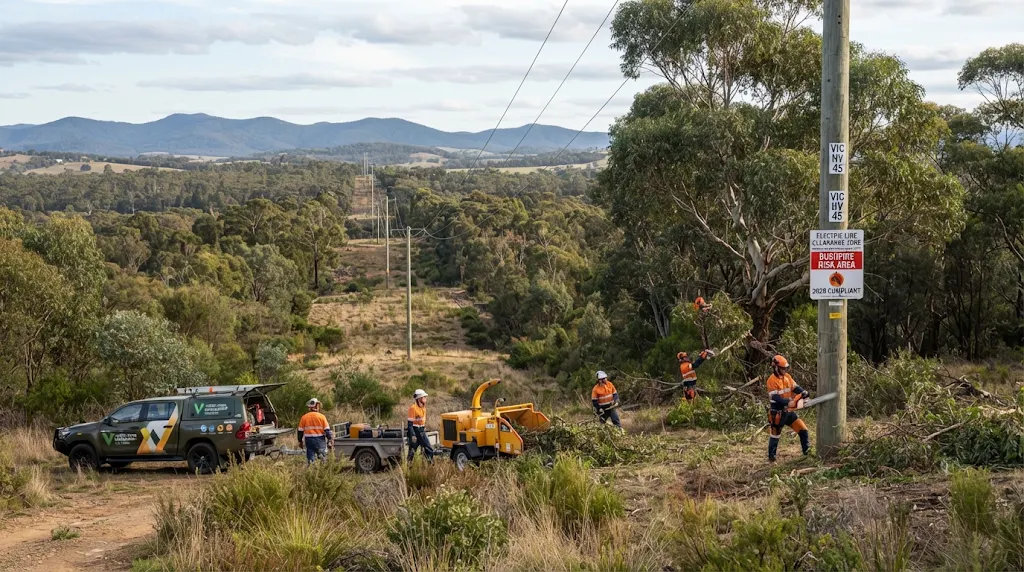
Trees and vegetation growing too close to overhead electricity lines can create serious safety hazards.
Contact between vegetation and energised power lines may result in electrical faults, power interruptions, electrocution or fire ignition.
In Victoria, where bushfire conditions can become severe during hot and dry weather, maintaining appropriate clearance around electricity infrastructure is an important part of fire prevention.
The 2026 regulations establish requirements for managing vegetation near electric lines while considering environmental protection and practical maintenance needs.
What Changed in the 2026 Regulations?
Following public consultation, the Victorian Government introduced several changes to the electric line clearance framework.
| Key Change | What It Means |
|---|---|
| Reduced clearance trials | A framework for controlled trials of reduced minimum clearance spaces |
| Management plans | Preparation cycle changed from annually to every five years |
| Environmental protection | Updated provisions for certain habitat trees and threatened fauna |
| Clearance exceptions | Streamlined arrangements for specified exceptions to standard clearance distances |
| Regulatory oversight | Energy Safe Victoria oversees approvals and conditions for reduced clearance trials |
These changes aim to balance electrical safety, bushfire prevention, environmental protection and operational efficiency.
1. Controlled Trials of Reduced Clearance Distances
One significant development is the introduction of a mechanism for trialling reduced minimum clearance spaces between vegetation and electric lines.
The framework allows controlled trials under conditions determined by Energy Safe Victoria (ESV).
The purpose is to develop evidence that may inform future clearance requirements, particularly in areas with lower bushfire risk.
However, the new framework does not automatically permit electricity operators or contractors to reduce existing clearance distances.
Any trial must follow the relevant approval process and conditions.
This approach allows potential changes to be evaluated while maintaining regulatory oversight of electrical and fire safety risks.
2. Five-Year Electric Line Clearance Management Plans
Another important change concerns Electric Line Clearance Management Plans (ELCMPs).
The previous annual plan preparation cycle has been replaced with a five-year cycle for relevant responsible persons.
This change is intended to reduce unnecessary administrative work while maintaining a structured approach to vegetation management.
Responsible parties must continue to comply with applicable clearance and safety obligations.
A longer management plan cycle should not be interpreted as permission to delay necessary vegetation inspections, pruning or hazard management.
3. Environmental and Vegetation Management Changes
The regulations also introduce changes designed to better balance electrical safety with environmental protection.
These include updated record-keeping arrangements for certain habitat trees associated with threatened fauna.
The framework also addresses how specific vegetation clearance exceptions may be applied.
The objective is to support responsible vegetation management without unnecessarily increasing administrative requirements.
Importantly, environmental considerations do not remove the need to manage fire and electrical safety risks.
What Do the Changes Mean for Electrical Contractors?
Electrical infrastructure operators and vegetation management contractors should review the updated requirements and determine which provisions apply to their activities.
Key considerations include:
- Confirming the applicable minimum clearance requirements.
- Reviewing vegetation management procedures and contractor responsibilities.
- Checking whether existing management plans require updating.
- Understanding the approval process for reduced clearance trials.
- Maintaining appropriate inspection and vegetation management records.
- Following Energy Safe Victoria guidance and applicable safety requirements.
Contractors should not assume that reduced clearance distances are permitted without the necessary approval.
How Do the Regulations Support Bushfire Prevention?
Vegetation contact with electricity infrastructure is a recognised ignition hazard.
Maintaining appropriate clearance distances helps reduce the likelihood of contact between trees and overhead power lines.
The updated regulations support a risk-based approach that considers both electrical safety and the practical challenges of vegetation management.
For businesses operating near electricity infrastructure, awareness of these risks can also support broader emergency planning and site safety procedures.
However, the regulations primarily concern electric line clearance. They do not introduce new technical requirements for building fire extinguishers, fire alarms or sprinkler systems.
Do the Regulations Affect Fire Protection Contractors?
The direct impact is greatest for electricity network operators, vegetation management contractors and other parties responsible for electric line clearance.
For fire protection contractors, the relevance is mainly related to broader fire prevention and understanding potential ignition hazards around electrical infrastructure.
The regulations do not replace existing Australian fire protection standards or introduce new requirements under AS 1851.
Fire protection companies should continue following the applicable standards and legislation for the systems they install, inspect and maintain.
Frequently Asked Questions
When did Victoria’s Electric Line Clearance Regulations 2026 commence?
The regulations commenced on 24 June 2026, replacing the interim regulations introduced in 2025.
What is the purpose of the new regulations?
They establish requirements for managing vegetation near electric lines to reduce electrical hazards, fire risks and other potential harm.
Can contractors now reduce vegetation clearance distances?
Not automatically. The regulations provide a framework for controlled trials, subject to approval and conditions determined by Energy Safe Victoria.
How often must Electric Line Clearance Management Plans be prepared?
The updated framework changes the relevant plan preparation cycle from annually to every five years. Other ongoing safety and clearance obligations continue to apply.
Do the regulations change Australian fire protection standards?
No. The changes concern vegetation management and electricity infrastructure safety, not the technical servicing requirements of AS 1851 or other building fire protection standards.
Conclusion
Victoria’s Electricity Safety (Electric Line Clearance) Regulations 2026 introduce important changes to the management of vegetation near overhead power lines.
The new framework includes controlled trials of reduced clearance distances, a five-year management plan cycle and updated environmental provisions.
These changes are particularly relevant to electricity network operators and vegetation management contractors responsible for maintaining safe clearance around electrical infrastructure.
By improving the management of vegetation-related electrical hazards, the regulations support Victoria’s broader efforts to reduce fire ignition risks and improve community safety.
Fire Factory Australia supplies fire protection equipment and safety products to Australian fire protection businesses and electrical contractors.
For product information and wholesale enquiries, contact Fire Factory Australia.
Official Sources
- Victorian Legislation – Electricity Safety (Electric Line Clearance) Regulations 2026
- Victorian Government – Notice of Decision to Make the Electricity Safety (Electric Line Clearance) Regulations 2026
Jurisdiction: Victoria, Australia
Commencement date: 24 June 2026