Description
Fire Detection, Control Panels and System Accessories
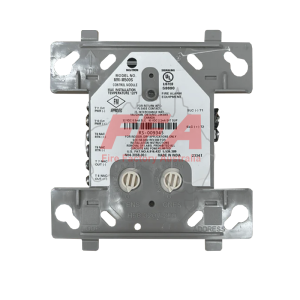
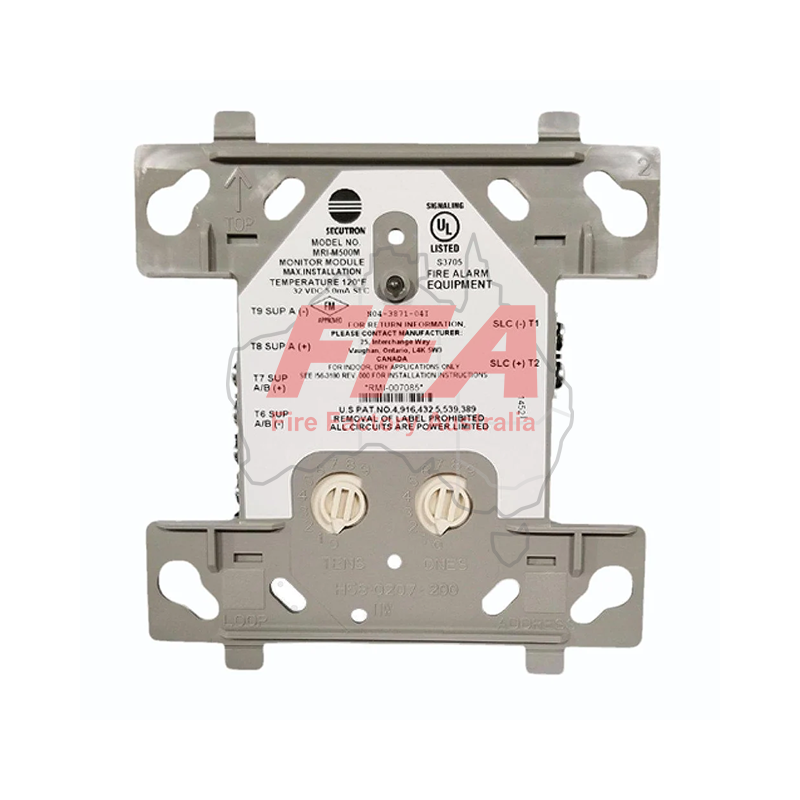
The M500M Addressable Monitor Module is an intelligent input interface designed to connect conventional contact devices to compatible addressable fire alarm systems. It provides reliable monitoring of normally open fire alarm, supervisory, and security contacts, enabling seamless integration of external devices into a signaling line circuit (SLC).
Operating on 15–32 VDC, the M500M features a fault-tolerant 2-wire or 4-wire initiating device circuit (IDC) with a supervised 47 kΩ end-of-line resistor for dependable circuit monitoring. Addressing is configured using rotary decade switches for fast installation and commissioning, while a panel-controlled LED indicator provides clear visual confirmation of module status.
The compact M500M mounts in a standard 4-inch square electrical box or optional SMB500 surface mount box, making it ideal for both new installations and retrofit projects. With low current consumption and robust environmental performance, it is well suited for commercial, industrial, healthcare, education, and public buildings.
The M500M is commonly used to monitor sprinkler flow switches, valve tamper switches, pressure switches, manual control contacts, plant equipment alarms, and other dry-contact devices that require integration with an addressable fire detection system.
Key Features
- Intelligent addressable monitor module
- Monitors normally open contact devices
- Supports 2-wire or 4-wire fault-tolerant initiating device circuits (IDC)
- Rotary decade switch addressing for simple configuration
- Panel-controlled LED status indication
- Operating voltage: 15–32 VDC
- Low average operating current of 350 µA
- 47 kΩ supervised end-of-line resistor
- Mounts in a standard 4-inch electrical box or optional SMB500 surface mount box
- Suitable for fire alarm, supervisory, and security monitoring applications
The M500M provides a reliable and cost-effective solution for integrating conventional contact devices into addressable fire alarm systems while maintaining full supervision, accurate event reporting, and compliance with modern fire detection system requirements.