
Table of Contents
ToggleFire Water Supply Systems in Australia: Maintenance, Testing and Compliance
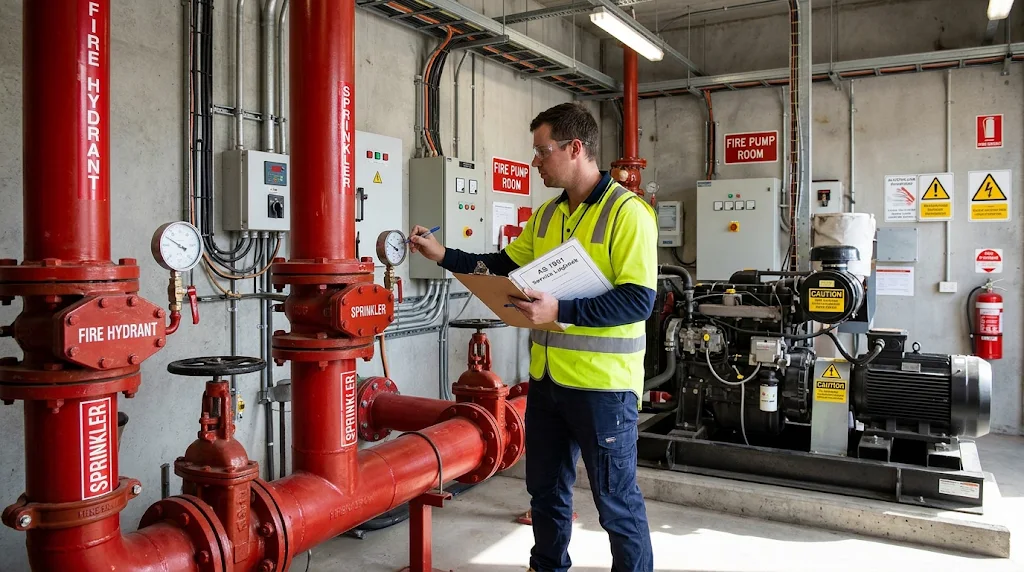
Reliable fire water supply systems are essential for effective fire protection in commercial, industrial and other buildings across Australia. Fire hydrants, sprinkler systems and fire pumps depend on suitable water availability, pressure and flow to operate as designed during a fire emergency.
However, installing a fire protection system is only the beginning. Regular inspection, testing, maintenance and accurate service records are important for keeping these systems ready for operation.
For fire protection contractors, facility managers and building owners, understanding the components of water-based fire protection systems can help improve maintenance planning and support applicable compliance requirements.
At Fire Factory Australia, we supply fire protection products and dedicated AS 1851 service logbooks to help industry professionals maintain organised inspection and testing records.
What Is a Fire Water Supply System?
A fire water supply system provides water for firefighting equipment and fixed fire protection installations.
Depending on the building and its fire protection design, water may be supplied through:
- Municipal water mains.
- Dedicated fire water storage tanks.
- Fire pumps and associated equipment.
- Combined water supply arrangements.
- Other approved water sources.
The purpose is to provide sufficient water at the required pressure and flow for the installed fire protection systems.
Fire water supply arrangements vary depending on building classification, system design, available infrastructure and applicable Australian Standards.
Main Components of Fire Water Supply Systems
| Component | Main function |
|---|---|
| Water storage tanks | Store water for firefighting use |
| Fire pumpsets | Provide required water pressure and flow |
| Fire hydrants | Provide water access for firefighting operations |
| Sprinkler systems | Discharge water automatically when activated |
| Control valves | Control or isolate sections of the system |
| Pressure gauges | Support monitoring and testing of system pressure |
| Pipework and connections | Transfer water between system components |
Each component contributes to overall system performance. A fault in one part of the installation may affect the reliability of the wider fire protection system.
Fire Hydrant Systems: Inspection and Maintenance
Fire hydrant systems provide firefighters with access to water during emergency operations.
In commercial and industrial buildings, hydrants may be connected to municipal supplies, dedicated water storage, fire pumps or a combination of these sources.
Their performance depends on the condition of the water supply, valves, pipework, connections and associated equipment.
Why Fire Hydrant Maintenance Matters
Routine inspection and testing can help identify:
- Leaking or damaged hydrant valves.
- Obstructed or inaccessible hydrant points.
- Incorrect or insufficient operating pressure.
- Water supply problems.
- Damaged connections and fittings.
- Defects affecting system performance.
For applicable systems, AS 1851—2012 Section 4 provides routine servicing requirements for fire hydrant systems.
Service records help document inspection results, testing activities, defects and corrective actions.
Fire Hydrant Service Logbooks
Fire protection contractors need consistent documentation to record hydrant servicing activities.
Fire Factory Australia supplies dedicated service logbooks designed to support organised fire hydrant inspection and testing records.
Using an appropriate logbook helps contractors maintain service histories and track outstanding maintenance issues.
Explore our Fire Protection Equipment Service Books for available fire hydrant logbooks and related products.
Fire Pumpsets: Supporting Reliable Water Pressure and Flow
Fire pumpsets are important components of many water-based fire protection installations.
They are used where additional pressure or flow is required to meet the system’s design requirements.
Depending on the installation, fire pumpsets may support:
- Fire hydrant systems.
- Automatic sprinkler systems.
- Combined hydrant and sprinkler arrangements.
- Dedicated fire water supply systems.
Two common fire pump configurations are diesel-driven and electric-driven pumpsets.
Diesel Fire Pumpsets
Diesel-driven fire pumpsets use an internal combustion engine to operate the pump.
Routine servicing may involve checking:
- Engine starting and operation.
- Fuel supply and associated equipment.
- Battery condition and starting systems.
- Cooling and lubrication systems.
- Pump pressure and performance.
- Controls, alarms and associated components.
Electric Fire Pumpsets
Electric fire pumpsets use an electric motor to drive the pump.
Routine servicing may involve checking:
- Motor starting and operation.
- Electrical supply and controls.
- Pump pressure and performance.
- Control panel indications.
- Associated valves and equipment.
- Faults and corrective actions.
For applicable installations, AS 1851—2012 Section 3 addresses routine servicing of fire pumpsets.
Fire Factory Fire Pumpset Logbooks
Fire Factory Australia offers dedicated logbooks for recording applicable inspection and testing activities.
Diesel Fire Pumpset Logbook – BDFPNJP
Designed for diesel-driven fire pumpsets used in sprinkler and hydrant systems, including associated jacking pumps.
Electric Fire Pumpset Logbook – BEFPNJP
Designed for electric-driven fire pumpsets used in sprinkler and hydrant systems, including associated jacking pumps.
These logbooks provide structured records for relevant pump operation, pressure readings, testing results, defects and corrective actions.
Explore the Fire Factory AS 1851 Logbook Range for available fire pumpset service books.
Fire Sprinkler Systems: Water Supply and Routine Servicing
Automatic fire sprinkler systems are designed to discharge water when individual sprinkler heads activate under fire conditions.
Their effectiveness depends on suitable water availability, correctly functioning components and regular maintenance.
A typical sprinkler installation may include:
- Sprinkler heads and pipework.
- Control and alarm valves.
- Water supply connections.
- Fire pumps and jacking pumps.
- Pressure gauges and monitoring equipment.
- Dedicated water storage where required.
Why Sprinkler System Maintenance Is Important
Regular servicing helps identify faults and conditions that could affect system operation.
These may include:
- Closed or incorrectly positioned valves.
- Pressure abnormalities.
- Leaks and damaged pipework.
- Faulty alarm components.
- Water supply deficiencies.
- Defects in associated pumps or controls.
For applicable installations, AS 1851—2012 Section 2 provides routine servicing requirements for sprinkler systems.
Fire Factory Sprinkler System Logbooks
Fire Factory Australia supplies service logbooks for different sprinkler system configurations.
Wet Pipe Sprinkler & Jacking Pump Systems Logbook – BWPS-JP
Supports documentation of applicable inspection and testing activities for wet pipe sprinkler systems and associated jacking pumps.
Dry-Pipe, Pre-Action, Deluge & Water Spray Sprinkler Logbook – BDP-PR-DWS
Provides structured records for servicing specialised sprinkler and water spray installations.
These logbooks help contractors organise inspection results, pressure readings, testing information, defects and corrective actions.
View our Fire Safety Service Logbooks.
AS 1851 Maintenance Requirements for Water-Based Fire Protection Systems
AS 1851—2012, Routine service of fire protection systems and equipment, provides servicing procedures for a range of fire protection installations.
For water-based fire protection systems, relevant sections include:
| Fire protection system | Relevant AS 1851 section |
|---|---|
| Automatic fire sprinkler systems | Section 2 |
| Fire pumpsets | Section 3 |
| Fire hydrant systems | Section 4 |
The required inspection and testing activities depend on the installed equipment, applicable regulations and relevant maintenance arrangements.
Why Accurate Service Records Matter
Proper maintenance documentation helps fire protection professionals:
- Record completed inspection and testing activities.
- Monitor system performance over time.
- Identify recurring faults and maintenance issues.
- Document defects and corrective actions.
- Maintain accessible service histories.
- Support applicable regulatory obligations.
Service logbooks provide a practical way to organise this information.
However, a logbook does not replace the inspection, testing or servicing work itself.
Required activities must be performed by suitably competent and appropriately licensed personnel where applicable.
Fire Factory Australia offers a range of dedicated AS 1851 Fire Safety Logbooks for different fire protection systems.
Fire Water Supply System Maintenance Checklist
Fire protection contractors and facility managers should review the condition and servicing status of their installed water-based fire protection systems.
The following checklist provides a general maintenance planning guide.
1. Verify Water Supply Availability
Confirm that the required water supply is available and that relevant storage levels, supply valves and associated equipment are being monitored.
2. Review Fire Pump Servicing
Check that applicable pump inspections and tests have been completed and that identified defects are being addressed.
3. Inspect Hydrant System Components
Review hydrant access, valve condition, connections and relevant inspection records.
4. Check Sprinkler System Maintenance
Confirm that applicable sprinkler inspections and tests have been completed and documented.
5. Review Pressure and Flow Test Records
Check relevant test results against the system’s applicable requirements and baseline information.
6. Identify Outstanding Defects
Review reported faults, incomplete maintenance activities and required corrective actions.
7. Maintain Accurate Documentation
Record completed inspections, testing results, defects and corrective actions in suitable service records.
This checklist is intended as general guidance and does not replace the detailed servicing procedures applicable to each system.
Fire Safety Maintenance and Compliance in NSW
In New South Wales, applicable essential fire safety measures must be maintained in accordance with relevant building and fire safety requirements.
From 13 February 2026, changes to NSW regulations introduced AS 1851—2012-based maintenance requirements for applicable essential fire safety measures in Class 1b and Class 2–9 buildings, subject to relevant exceptions and alternative maintenance arrangements.
Building owners and responsible parties should confirm the requirements applying to their properties and installed fire protection systems.
For water-based fire protection installations, this may involve maintaining appropriate inspection, testing and servicing documentation for hydrant systems, fire pumpsets and sprinkler systems.
Accurate service records can help building managers and contractors monitor maintenance activities and support applicable compliance obligations.
For official guidance, visit NSW Government – Fire Safety.
Choosing the Right AS 1851 Service Logbook
Different fire protection systems require different inspection and testing records.
Using a system-specific logbook can help contractors organise the information relevant to each installation.
Fire Factory Australia supplies dedicated service logbooks for:
- Fire Hydrant Systems: Inspection and testing records for applicable hydrant installations.
- Diesel Fire Pumpsets: Service records for diesel-driven pumps and associated equipment.
- Electric Fire Pumpsets: Service records for electric-driven pumps and associated equipment.
- Wet Pipe Sprinkler Systems: Records for wet pipe sprinkler systems and associated jacking pumps.
- Dry-Pipe, Pre-Action, Deluge and Water Spray Systems: Records for specialised sprinkler and water spray installations.
Our logbooks are developed to support practical maintenance documentation for fire protection professionals.
Explore the complete Fire Factory Australia Logbook Range.
Frequently Asked Questions
What is a fire water supply system?
A fire water supply system provides water for firefighting equipment and fixed fire protection installations. It may include water storage tanks, pumps, hydrants, sprinklers, valves and associated pipework.
Why is fire water supply maintenance important?
Regular maintenance helps identify faults that could affect water availability, pressure, flow or system operation during an emergency.
Which AS 1851 sections apply to water-based fire protection systems?
AS 1851—2012 Section 2 covers sprinkler systems, Section 3 covers fire pumpsets and Section 4 covers fire hydrant systems.
Do fire pumps need regular testing?
Applicable fire pumpsets require routine servicing and testing in accordance with relevant standards and regulatory requirements. These activities help identify operational faults and performance issues.
Why should fire hydrant and sprinkler maintenance be recorded?
Service records document inspections, test results, defects and corrective actions. They help contractors and building managers maintain an organised history of maintenance activities.
What fire protection logbooks does Fire Factory Australia supply?
Fire Factory Australia supplies dedicated logbooks for hydrant systems, diesel and electric fire pumpsets, wet pipe sprinkler systems and specialised sprinkler installations.
Conclusion: Reliable Fire Protection Requires Regular Maintenance
Fire water supply systems are essential components of many commercial and industrial fire protection installations.
From hydrants and fire pumps to automatic sprinkler systems, each component must operate as intended when required.
Regular inspection, testing, maintenance and accurate service records help identify potential problems and support long-term system reliability.
For fire protection contractors and facility managers, selecting suitable maintenance documentation is an important part of managing these systems effectively.
Fire Factory Australia – Supporting Fire Protection Professionals
Fire Factory Australia supplies fire protection products, accessories and dedicated AS 1851 service logbooks to fire companies, electrical contractors and maintenance professionals across Australia.
Our range includes logbooks for fire hydrants, diesel and electric fire pumpsets, wet pipe sprinklers and specialised sprinkler systems.
Explore Fire Factory Australia’s AS 1851 Logbooks
Contact Fire Factory Australia for product information, availability and trade enquiries.
