Table of Contents
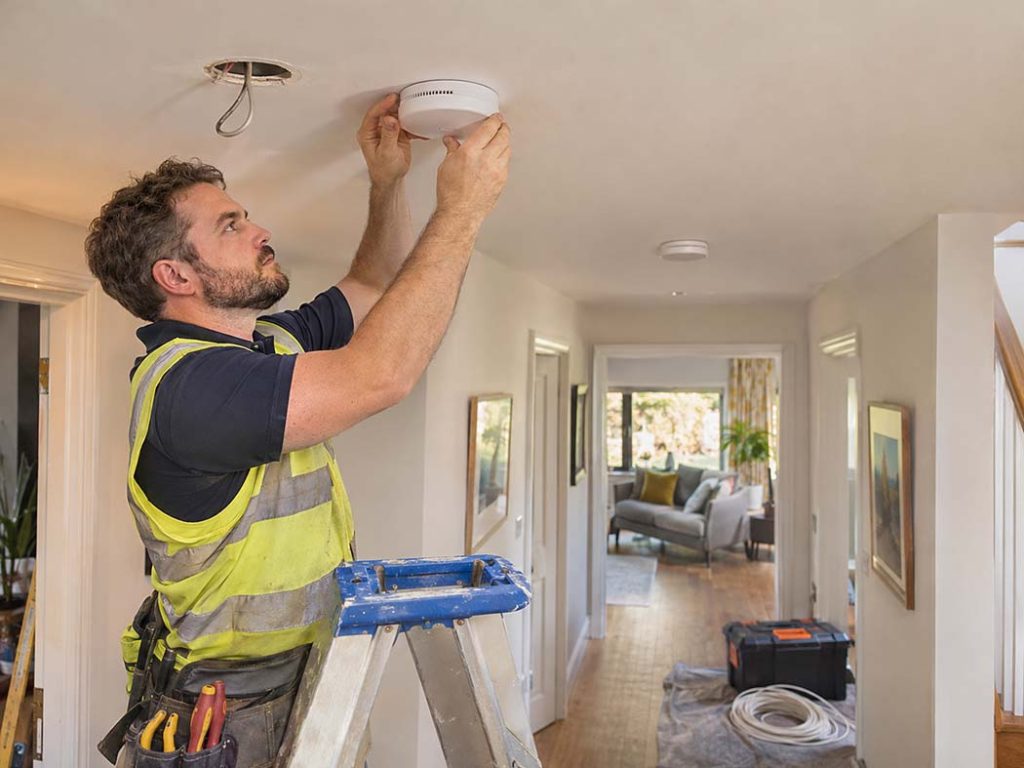
ToggleRetrofitting smoke alarms often comes down to what is already in the building. If suitable interconnect wiring exists and remains usable, a hardwired system may be straightforward. If new interconnect cabling would mean opening ceilings or chasing walls, wireless RF can reduce the amount of building work.
The choice is not simply between mains-powered and battery-powered alarms. Power supply and interconnection are separate parts of the system.
Power supply and interconnection are separate
A smoke alarm can be powered from 240V mains and still communicate wirelessly with other alarms.
Fire Factory’s FFA-710 is one example. It is a 220 to 240V AC photoelectric smoke alarm with a built-in 10-year lithium backup battery. It supports both hardwired and wireless RF interconnection.
That gives contractors more flexibility on retrofit jobs. Existing wiring may be retained where suitable, while wireless communication can be considered where running a new interconnect conductor would add unnecessary work.
When comparing hardwired smoke alarms, check both the power arrangement and the available interconnection method. Treating those as the same thing can lead to the wrong product being ordered.
When hardwired interconnection makes sense
Hardwired interconnection can be practical when the property already has a usable interconnect cable between alarm locations.
Replacement work is usually simpler when the new alarm is compatible with the existing wiring arrangement and the cable route does not need to change. It may also suit renovations where ceilings are already open and electrical work is being carried out as part of a larger project.
The FFA-710 supports hardwired interconnection of up to 30 alarms. Its installation instructions also specify that hardwired interconnected units must be supplied from the same circuit.
Those details should be checked before replacing one alarm with another. A similar appearance or mounting style does not guarantee electrical compatibility.
Where wireless RF helps in a retrofit
Wireless interconnection is often useful when the building has mains power available at each alarm point but no suitable interconnect cable between locations.
Instead of installing a new communication wire, compatible alarms exchange the alarm signal by radio frequency. That can reduce ceiling access and cabling work in finished homes, apartments and refurbishment projects.
Fire Factory’s FFA-710 supports wireless RF interconnection of up to 22 alarms. The PSA range also includes the LIF6000WB wireless interlink base, which is designed to add wireless interconnection to compatible PSA alarms.
For contractors looking at wireless interconnected smoke alarms, the manufacturer’s compatibility list, network limit and installation instructions should be checked before ordering. RF products are not automatically interchangeable across brands or product families.
Compatibility can decide the retrofit
A retrofit is rarely a blank-slate installation. Existing alarm bases, cable routes, power circuits and installed brands can affect the work required.
Some systems allow compatible alarms to be added with wireless bases or modules. Others may be better replaced as a matched group if the existing models are obsolete or cannot communicate with the proposed replacements.
Maximum network size also varies by product. The FFA-710 specifies different limits for hardwired and wireless interconnection, while PSA wireless systems have their own published limits.
Mixing devices without checking compatibility can leave alarms operating independently when the design requires interconnection.
Australian requirements still apply
Interconnection method does not remove the need to meet the applicable smoke alarm requirements.
Under the NCC, smoke alarms required in relevant Class 1 buildings must comply with AS 3786. Where more than one alarm is required, interconnection is also required under the applicable provisions. In buildings supplied with consumer mains power, mains-powered alarms may be required depending on the building work and jurisdiction.
State and territory rules can add further requirements, particularly for existing homes, rental properties and renovations.
For interconnected smoke alarms in Sydney, contractors should check the current NSW requirements as well as the product instructions and project documentation before installation.
FAQs about smoke alarm retrofits
Can mains-powered smoke alarms be interconnected wirelessly?
Yes. A smoke alarm can use mains power while using RF for communication between alarms. The FFA-710, for example, is mains powered with lithium battery backup and supports wireless RF interconnection.
Do wireless interconnected smoke alarms need an electrician?
That depends on the product and the work involved. Any installation or replacement involving 240V mains wiring must be carried out in accordance with applicable electrical requirements. Battery-powered RF alarms are a different case, so the product type should be confirmed first.
Can wireless and hardwired smoke alarms be mixed in one retrofit?
Some alarm systems support both methods, but compatibility must be confirmed. The alarms, bases or wireless modules need to be designed to communicate with each other. RF capability alone does not guarantee that two products will interconnect.
Choosing equipment for the job
A retrofit usually works best when the existing wiring and alarm compatibility are checked before products are ordered.
Fire Factory Australia supplies FFA and PSA smoke alarms, wireless interlink products and related accessories for trade and commercial customers. Businesses looking for a smoke alarm supplier in Sydney can contact our Smithfield or Granville locations, with supply available across Australia.
Check the existing installation, confirm the required interconnection method and match the replacement equipment to the manufacturer’s specifications before proceeding.