Table of Contents
TogglePaper vs Digital Fire Service Records: What Should Contractors Check?
Quick Answer: Contractors should confirm whether local rules, insurance requirements, and applicable standards accept electronic fire records before replacing a paper fire logbook. The right option depends on availability, access, integrity, and required content. Verify current jurisdiction requirements and keep audit ready records that show who performed work, when, and what was found.
Why the Paper vs Digital Fire Logbook Choice Matters
For a paper vs digital fire logbook decision, contractors are not only selecting a format. They are selecting a control for compliance, handover, warranty, insurance, and maintenance history. The right format depends on the site, the systems installed, the client’s audit requirements, and the legal or standard based rules that apply in the relevant Australian jurisdiction.
A fire service record should support traceability. It should show what was inspected, what was found, what work was completed, and what actions remain. For fire companies, electrical companies, retail facilities, and property managers, the record is a working document. It can affect response times, repeat failures, equipment replacement decisions, and the ability to defend a service claim. Contractors can compare related B2B fire protection products on FireFactory.
How to Compare a Paper vs Digital Fire Logbook
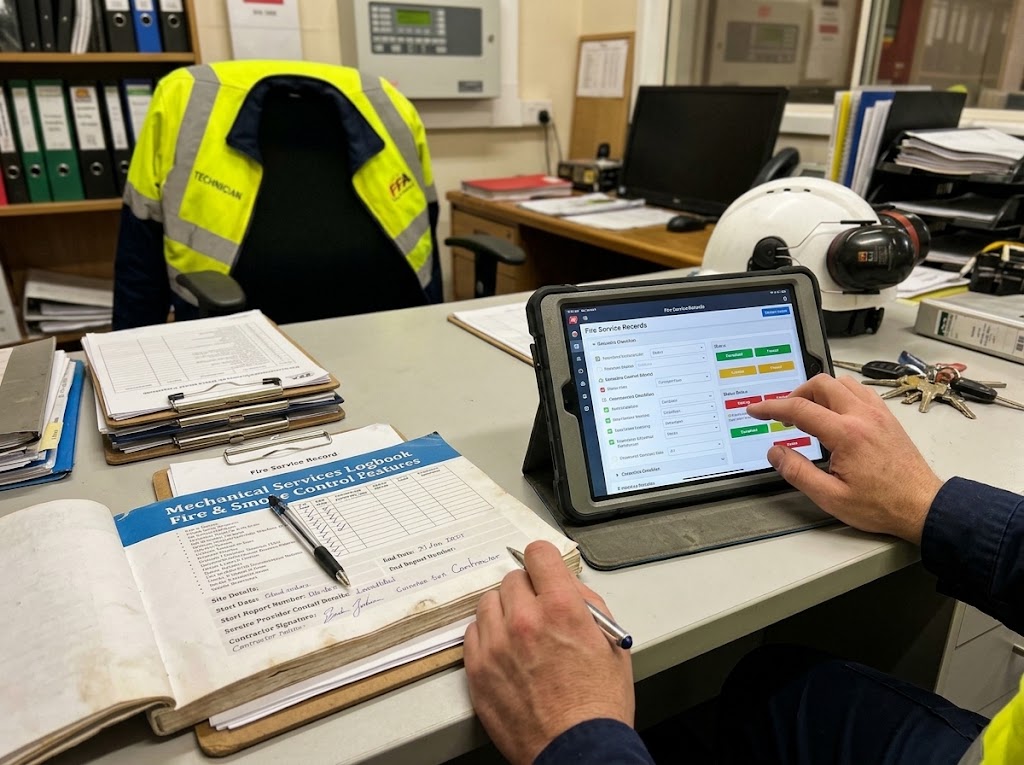
A practical comparison focuses on availability, access, integrity, and required record content. The table below shows how each format usually behaves in day to day fire service work.
| Factor | Paper fire logbook | Electronic fire records |
|---|---|---|
| Availability | Can be kept on site or in the office. It can be affected by loss, water damage, illegible writing, and limited storage. | Can be stored centrally and accessed from devices. It relies on backup, permissions, and system availability. |
| Access | Requires physical presence and may need multiple copies for site, client, and contractor use. | Can support role based access, search, and reporting. It needs clear ownership and controlled sharing. |
| Integrity | Entries can be altered, faded, or missing without obvious evidence. | Can support time stamps, version control, and access logs where available, so changes are traceable. |
| Required content | Must capture the same essential service details. Consistency depends on practice and review. | Can enforce mandatory fields and reduce missing information, but the data still needs verification. |
| Audit and handover | Easy to inspect quickly, but can be slow to search across dates or assets. | Can export reports, compare history, and support continuity when staff or contractors change. |
Required Record Content for Fire Service Work
The format matters less than the content. A useful record should identify the asset, describe the service, and show the outcome. For fire protection equipment, this usually includes details that help the next contractor understand the system condition and any safety restrictions.
- System type, location, asset identifier, operational status, and manufacturer or model where relevant.
- Service date, scope of work, and inspection or testing performed.
- Findings, defects, mechanism issues, safety issues, and any immediate restrictions placed on the system.
- Work completed, parts replaced, and follow up actions required.
- Contractor details, responsible person, and client acknowledgement where required.
- Next scheduled action or required review, where confirmed by the applicable rule or standard.
Contractors should avoid generic entries such as “service completed” without context. The record should be clear enough for a reviewer to understand what was checked, what was found, and why a follow up action is needed. If a system is out of service, the record should state the reason, the date, and the responsible party for reinstatement.
Jurisdiction, Standards, and Practical Checks
Contractors should not assume every jurisdiction permits the same format. State and territory requirements, local regulatory expectations, insurer conditions, and applicable Australian Standards can all affect what must be recorded and how it must be kept. Before switching from a paper logbook to electronic records, verify the exact clauses, intervals, and format requirements that apply to the system and occupancy.
A standards catalogue can help identify the current document for the system being serviced. Use the Standards Australia search page to locate the relevant standard, then obtain the full document or an official technical guide before stating detailed requirements. This step is important because a catalogue locator does not contain the full standard text, and service obligations can vary by equipment type, risk, and site configuration.
Practical checks before choosing electronic fire records
Electronic fire records are useful when they improve reliability. Contractors should check the following before committing to a digital system or replacing paper logbooks on all sites.
- Offline access: Can the system capture service details when site connectivity is limited?
- Role based permissions: Can clients, engineers, and contractors see only the information they should see?
- Backup and retention: Is there a backup process and a confirmed retention period?
- Field validation: Does the form require the essential fields to be completed before submission?
- Export and reporting: Can the record be exported for audits, insurance reviews, or handover?
- Change control: Can edits be traced, and can previous versions be recovered if needed?
- Device durability: Can the tablet, phone, or laptop be used safely on site?
Some sites may need a hybrid approach. A paper logbook can provide immediate site sign off, while electronic records provide long term storage, search, and reporting. The key is to ensure both formats contain the same required content and are reconciled regularly.
When sourcing recordkeeping supplies or fire protection components, contractors should check exact model evidence, compatibility, and any product specific service requirements. FireFactory supplies B2B fire protection products for Australian businesses, and product specifications should be confirmed before use on a site.
Frequently Asked Questions
Is a digital fire logbook always accepted?
No. Acceptance depends on jurisdiction, applicable standards, insurer conditions, and client requirements. Contractors should verify the current rules before replacing a paper logbook with electronic fire records.
What is the main difference between a paper fire logbook and electronic fire records?
A paper logbook is a physical record kept at a site or office, while electronic fire records are stored digitally and can support search, access control, and export. Both formats need to meet the required content and integrity standards.
What information should a fire service record include?
A fire service record should identify the system, location, service date, scope, findings, work completed, contractor details, and follow up actions. The exact required fields depend on the system type and the applicable Australian rules.
How should contractors store electronic fire records?
Contractors should use secure access, backup, version control, and exportable reports. Records should be stored in a way that supports audits, client handover, and long term retention confirmed from official sources.
Can a paper logbook be used alongside electronic fire records?
Yes. A paper logbook can be used for immediate site sign off, while electronic records can provide central storage and reporting. The formats should be reconciled so the required content is complete and consistent.
Conclusion
Contractors should treat the paper versus digital decision as a compliance and operational check, not just an administrative preference. Verify the required format, required content, and jurisdiction specific rules before selecting a system. Then choose the option that supports availability, access, integrity, and audit readiness.
Need B2B fire protection supplies? Contact FireFactory to compare Australian fire protection products, verify exact model evidence, and support compliant service delivery.