Table of Contents
ToggleNT Property Sales and Leasing: Which Smoke Alarm Type Is Approved?
Quick Answer: In the NT, an NT approved smoke alarm for residential sales or leases is a photoelectric unit. It can be hardwired or a permitted sealed battery type, depending on current requirements. Confirm placement, intervals, and product model before compliance work.
For Darwin rental smoke alarms and other NT residential transactions, the compliance point is practical. The Northern Territory guide identifies photoelectric smoke alarms as the approved type for relevant sale or lease situations. It also separates hardwired arrangements from permitted sealed battery arrangements, so the selected unit must match the property trigger, the installation method, and the current NT smoke alarm requirements. This article gives fire companies, electrical contractors, property managers, and B2B buyers a clear way to choose, install, and document compliant equipment from FireFactory.
NT Approved Smoke Alarm Requirements for Property Sales and Leases
An NT approved smoke alarm for residential sale or lease work is a photoelectric alarm. The NT Government guide defines the approved photoelectric alarm and the relevant sale or lease triggers. That matters because photoelectric alarms detect smoke by scattering light in a sensing chamber, and their response to smoke particles is the basis for the approved equipment class.
Compliance is not only about choosing a photoelectric unit. The property trigger determines the obligation. The NT guide identifies when a sale or lease event creates the requirement, and it distinguishes hardwired arrangements from permitted sealed battery arrangements. Before a contractor quotes the work, the exact clause, the installation method, and the selected model should be checked against the current official source and applicable Australian requirements. This avoids the common failure where a unit looks compliant on the shelf but does not match the property trigger or the permitted power arrangement.
For commercial teams, the practical impact is simple: standardize the compliance check. Ask whether the transaction is a sale or lease, identify the relevant NT trigger, confirm the approved photoelectric type, then verify whether a hardwired or sealed battery unit is permitted for that property.
Hardwired Alarms vs Permitted Sealed Battery Alarms
Once the approved type is confirmed, the second decision is the power arrangement. Hardwired photoelectric alarms and permitted sealed battery photoelectric alarms serve the same approved detection class, but they differ in installation, maintenance, and documentation.
| Feature | Hardwired photoelectric | Permitted sealed battery photoelectric |
|---|---|---|
| Power source | Building power supply with model specific backup or battery requirements | Manufacturer sealed battery with fixed service life |
| Typical installation | Typically requires wiring and electrical trade work | Usually simpler mounting, with less electrical work |
| Maintenance focus | Wiring integrity, alarm function, and backup power if fitted | Battery end of life, fault signals, and replacement timing |
| Selection check | Confirm the model, wiring, and installation method meet the current NT requirements | Confirm the unit is a permitted sealed battery photoelectric alarm and record the service life |
Hardwired units are commonly specified where wiring access is practical and where the site needs a stable power connection. Sealed battery units are useful where the current requirements permit that arrangement and the site needs a lower maintenance option. In both cases, the model must be photoelectric. An ionization unit, a generic alarm, or a unit with an unclear data sheet should not be used for NT sale or lease compliance work.
Sale and Lease Triggers for Darwin Rental Smoke Alarms
For Darwin rental smoke alarms, the sale or lease trigger is the first compliance question. A property may be occupied, vacant, newly built, or changing tenants, and the transaction event can determine the required alarm arrangement. The NT guide defines the relevant sale or lease triggers, so property managers, agents, and contractors should not rely on the age of the alarm alone.
A practical workflow is:
- Identify the transaction. Confirm whether the property is being sold, leased, or let again and when the relevant NT trigger applies.
- Confirm the approved type. Select a photoelectric smoke alarm, not an unapproved alternative.
- Choose the permitted power arrangement. Verify whether a hardwired or sealed battery unit is appropriate for the property and installation conditions.
- Check placement and quantity. Use the current NT guide for the required placement, intervals, and any additional conditions.
- Record the evidence. Store the model number, installation date, installer details, and compliance notes with the property file.
This approach is especially useful for Darwin rental smoke alarms because turnover can be high. If the same compliance checklist is used for each tenancy change, the team reduces the risk of missed obligations, incorrect product substitution, or incomplete documentation.
Installation, Maintenance, and B2B Sourcing
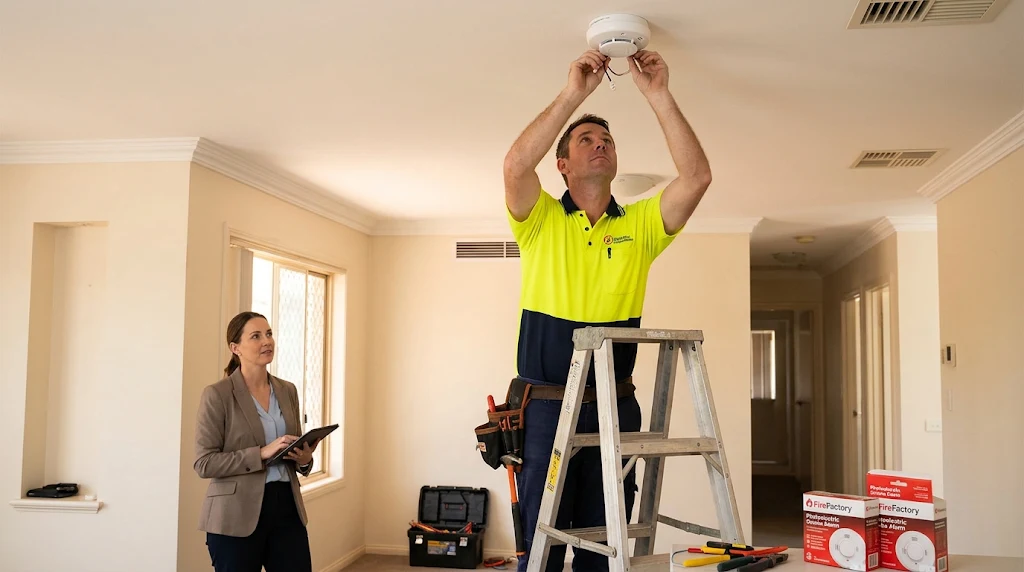
Installation quality affects whether an NT approved smoke alarm remains compliant over time. The installer should confirm the unit is the correct photoelectric type, that it is mounted in the required location, and that the power arrangement matches the permitted option. For hardwired alarms, the electrical connection should be checked by the appropriate trade. For sealed battery alarms, the unit should be installed with a clear record of its service life and replacement point.
Common failure points include expired battery life, dust or debris in the sensing area, damaged mounting, incorrect model substitution, and missing documentation. Regular testing and cleaning help identify these issues early, but the official interval and maintenance requirement should be verified against the current NT guide and manufacturer instructions.
B2B buyers should also buy with documentation in mind. A useful purchase specification should state the approved detection type, the power arrangement, the model, the quantity, and the delivery format. For fire companies, electrical contractors, and retail stockists, standardizing on a small number of documented models reduces quoting errors and makes tenancy handover checks faster. FireFactory provides B2B supply for photoelectric smoke alarm categories used in residential compliance projects, and the selected model should still be checked against the current NT requirements before purchase.
Frequently Asked Questions
What type of smoke alarm is approved in the NT for property sales or leases?
The NT guide identifies photoelectric smoke alarms as the approved type for relevant sale or lease triggers. The unit may be hardwired or a permitted sealed battery type, depending on the current requirements and the property conditions.
Can a battery powered smoke alarm be used in a Darwin rental property?
A battery powered unit may be acceptable only if it is a permitted sealed battery photoelectric alarm under the current NT requirements. Standard batteries that require user replacement are not the safe assumption, so the exact model and power arrangement should be verified before installation.
Who decides whether a smoke alarm is hardwired or sealed battery?
The decision is based on the current NT guide and the property installation conditions. The contractor should confirm the permitted arrangement, then select a photoelectric model that matches the approved type and the site requirements.
How often should rental smoke alarms be checked?
Alarms should be tested and maintained according to the current NT guide, manufacturer instructions, and any lease or property management standard. The exact interval should be verified before scheduling inspections, because requirements can change and property conditions can affect service life.
What documentation should a property manager keep?
Keep the alarm model, installation or replacement date, installer details, power arrangement, and compliance notes. This evidence helps show that the correct NT approved smoke alarm was selected, installed, and maintained for the property.