Table of Contents
ToggleNSW Rental Smoke Alarms: What Should Service Contractors Document?
NSW rental smoke alarm maintenance requires service contractors to record more than a pass or fail result. A clear documentation trail supports landlord smoke alarms records, protects the business, and gives tenants, agents, and strata bodies evidence that the work was completed. The current NSW government guidance for smoke alarms in a rental property provides the baseline for residential rental checks. Contractors should use that guidance, the tenancy instruction, and the building record to build a defensible service file.
For B2B fire protection equipment and product options, see the FireFactory website.
What a Service File Should Include
A useful record starts with the job scope and ends with evidence that the work was completed. The file should show which requirement applied, what condition was found, what action was taken, and who was responsible for the next step.
| Record item | What to document | Why it matters |
|---|---|---|
| Site and client details | Address, lot or unit, strata scheme, landlord, agent, tenant, work order, and service date. | Links the work to the correct property and instruction. |
| Requirement basis | NSW rental guidance, tenancy agreement, strata by-law, building type, client instruction, and any specified detector requirement. | Shows which rule or instruction applied to the job. |
| Alarm identification | Location, model, serial or batch number where visible, power source, mounting method, and any label. | Supports future service, parts selection, and dispute review. |
| Condition and function | Test result, indicator light, audible response, chirp, housing condition, tamper evidence, lens or vent obstruction, and accessibility. | Explains the fault and the reason for the action taken. |
| Maintenance action | Cleaning, battery replacement, reseating, testing, replacement, repair, failed unit, not accessed, and the reason for the outcome. | Creates a clear work history for the alarm. |
| Responsibility and follow up | Authorising party, installer or service provider, cost responsibility, tenant notice, handover note, and next review date. | Reduces confusion between landlord, agent, tenant, and strata roles. |
Do not assume the same answer applies to every tenancy. The record should show whether the work was for a private rental, a strata lot, a common area, or a commercial tenancy.
Checks, Repairs, and Responsibility
Inspection and testing
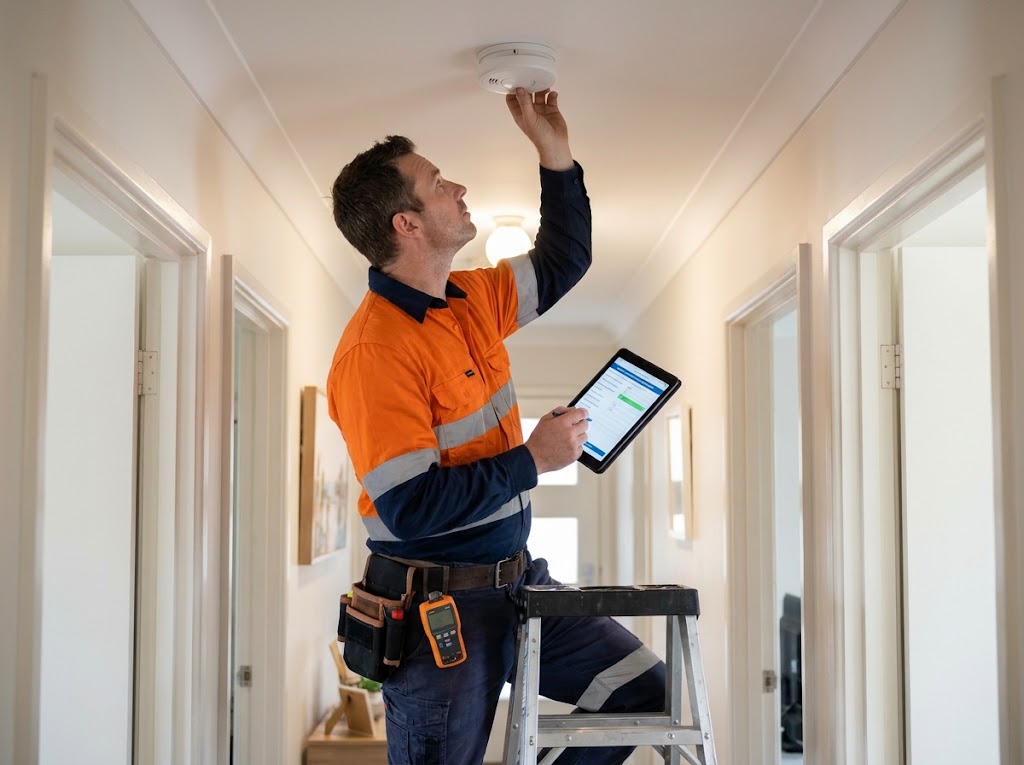
Inspect each alarm within the agreed scope. Record the location, model, serial or batch number where visible, power source, mounting method, and any labels. Note whether the unit is battery powered, mains powered, or has a backup battery because the operating mechanism and replacement parts differ. Test the alarm using the manufacturer method. Note the test result, indicator light, audible response, chirp, and any obstruction. If the alarm fails a test, record the failure mode before moving to repair or replacement.
Repairs and replacement
Record maintenance actions that are safe and authorised. Cleaning, battery replacement, reseating, and functional testing are common service actions. Many smoke alarms are sealed units, so opening a unit should follow the manufacturer instruction or an authorised service procedure. If replacement is required, record the failed unit condition, the replacement model, power source, mounting, and any client or strata specification.
Responsibility and handover
Record who authorised the work, who will carry out replacement or repair, and who bears the cost. For landlord or agent work, capture the instruction. For strata work, capture the strata manager instruction or by-law reference where provided. For tenant reported faults, capture the date, fault description, and outcome. A short handover note reduces disputes and gives the client a clear next step.
Strata and Common Property Exceptions
Strata buildings need a different documentation approach because responsibility can sit with the lot owner, the landlord, the tenant, or the strata scheme. A smoke alarm in a common area, a lot, or a tenancy may follow different ownership, maintenance, and replacement arrangements. The contractor should record the exact scope rather than applying one residential rental checklist to the whole building.
- Record whether the alarm is in common property, a lot, or a tenancy.
- Record the strata scheme, lot number, and building area where relevant.
- Record any strata by-law, maintenance schedule, or fire safety system register reference supplied by the client.
- Record access requirements, key holding, and the person who authorised entry.
- Record whether the alarm is part of a larger detection system or a standalone unit.
Where a client references an Australian Standard, a specific detector type, or a building requirement, record the reference in the file. This keeps the work file aligned with the instruction and supports later review.
Common Failure Points and Evidence Requirements
Service contractors should document the condition that caused the failure, not only the replacement action. Common failure points include a blocked sensor, dirty lens or vents, low or corroded battery contacts, a failed test, intermittent chirp, tamper evidence, broken housing, poor mounting, and inaccessible location. These details help the client understand whether the issue was environmental, age related, or installation related.
- Photograph the alarm before work where safe to do so.
- Photograph the fault, label, model, and mounting point.
- Record the test method and result.
- Record the parts changed, including battery type where visible or required by the client.
- Record any unit that could not be accessed or tested.
- Record the follow-up date and the responsible party.
When a replacement is specified, B2B buyers should capture the exact model, power source, mounting style, and any client or strata requirement. FireFactory can support Australian service teams with B2B fire protection equipment and product options for rental, strata, and commercial sites.
NSW Rental Smoke Alarm Maintenance Checklist
- Confirm the scope, requirement source, and work instruction.
- Identify each alarm, location, model, and mounting method.
- Inspect the unit for damage, tamper, obstruction, and battery condition.
- Test the alarm and record the result.
- Complete only authorised maintenance or repair work.
- Record replacement details, including model and power source.
- Capture photos and notes that support the service file.
- Confirm responsibility, cost authority, and follow-up date.
Frequently Asked Questions
What should a service contractor include in an NSW rental smoke alarm maintenance record?
The record should include the property details, work instruction, alarm model and location, test result, fault found, action taken, parts changed, and the responsible party. It should also show whether the work applied to a tenancy, a strata lot, or a common area. This makes the file easier to review later.
Who is responsible for replacing smoke alarms in a NSW rental property?
Responsibility can depend on the tenancy instruction, the condition of the alarm, and the applicable NSW guidance. The work file should record who authorised the replacement and who bears the cost. Contractors should not assume a single rule applies to every landlord or agent.
Can strata by-laws change smoke alarm documentation?
Yes. A strata scheme may assign alarm ownership, maintenance, or replacement to the strata body, lot owner, or tenant. Contractors should record the strata reference, alarm location, and the instruction that applies. This prevents a residential rental checklist from being used incorrectly.
How often should smoke alarms be tested in rental properties?
Test the alarms according to the work instruction, client schedule, or manufacturer service interval. Record the date, method, and result. A consistent testing record supports the maintenance file and helps identify faults early.
What evidence supports a smoke alarm replacement?
Useful evidence includes a failed test, damage, tamper evidence, a low or corroded battery that cannot be corrected, and the client instruction. Photos and model details help explain the reason for replacement. The file should show the old unit condition and the replacement unit details.
Should photos be part of smoke alarm documentation?
Photos can be useful when they are safe to take. They can show the alarm location, label, fault, mounting, and completed work. Use them to support the written record, not to replace a clear written test result.
Conclusion
Service contractors can reduce disputes by documenting the requirement, the alarm condition, the action taken, and the responsible party. A clear file supports landlord smoke alarms records, strata handover, and future maintenance planning. It also helps fire, electrical, and retail service teams deliver work that is practical and easy to defend.
FireFactory supports Australian B2B fire protection buyers with equipment and product information for rental, strata, and commercial sites. Contact the FireFactory team to confirm model options, availability, and documentation support for your next smoke alarm service plan.