
Table of Contents
ToggleNorthern Territory Prescribed Buildings: What Fire Records Should Contractors Prepare?
Quick Answer: Contractors should confirm prescribed status, then prepare NT AS 1851 fire records; Darwin fire maintenance logbooks should show asset registers, inspection, testing, maintenance, defects, and corrective actions tied to current NTFRS requirements for each prescribed building and owner before starting work.
Prescribed buildings in the Northern Territory require contractors to understand which fire safety systems are present, which obligations apply, and what evidence will support ongoing maintenance. The NT Fire and Rescue Service recognises AS 1851-2012 for its building fire-safety program. That makes clear documentation essential. Contractors in Darwin and other NT locations should prepare records that match the building’s current status, equipment list, and applicable requirements. For documented replacement parts and maintenance components, contractors can use the FireFactory contact page to enquire about B2B fire protection procurement.
Confirm Prescribed Building Status First
Before preparing any fire records, a contractor should confirm whether the building is prescribed and identify the current applicable requirements. The building’s fire safety classification, occupancy type, and system configuration affect the records needed. The NTFRS fire safety information is a useful starting point for confirming the correct compliance context.
Contractors should also verify the exact clauses, intervals, and product claims before drafting documentation. If a specification sheet, certificate, or maintenance label cannot be verified against current official sources or exact model evidence, it should not be treated as complete. This step helps prevent incorrect logbook entries, missed equipment, or unsupported compliance statements.
NT AS 1851 fire records; Darwin fire maintenance logbooks
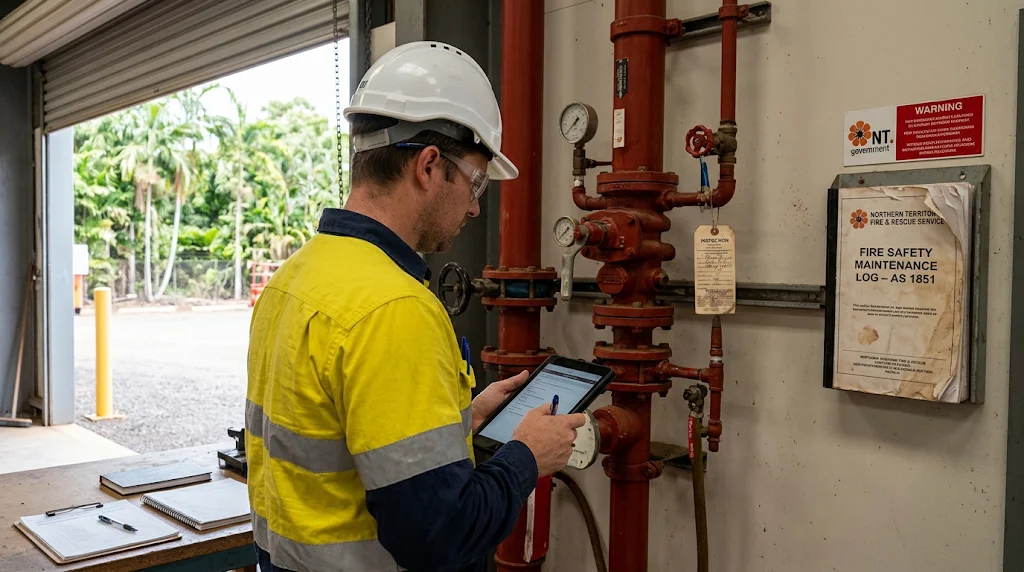
NT AS 1851 fire records are the documentary trail that supports the building fire-safety program. They should connect each asset to its service history, test results, defects, and corrective actions. Darwin fire maintenance logbooks serve the same purpose for facilities in Darwin and nearby locations. The logbook is not just a service sheet. It is the working record that shows how equipment was maintained over time.
For AS 1851-2012 aligned documentation, the record should identify the asset, the standard or requirement referenced, the service performed, the date, the technician or responsible party, and any follow-up needed. Where equipment is replaced, the new model, serial number, and supplier evidence should be recorded so future maintenance teams can verify compatibility.
Core Records Contractors Should Prepare
The following records help contractors demonstrate that a fire safety system has been assessed, maintained, and kept in a safe operating state. Each item should be tailored to the building’s prescribed status and current applicable requirements.
- Asset register listing fire detection, alarm, suppression, floodlighting, signage, and other installed fire safety equipment.
- Location plan or schedule identifying where each asset is installed, including floor, area, and reference number.
- Inspection records showing the condition, accessibility, and visibility of equipment at each visit.
- Testing records showing the function of alarms, control panels, water flow, release devices, or other relevant components.
- Maintenance records showing cleaning, adjustment, battery replacement, lubrication, or other servicing tasks.
- Defect reports describing faults, suspected failures, temporary risks, and actions taken.
- Corrective action records showing when repairs, replacements, or retests were completed.
- Certificate or declaration of compliance where applicable, clearly limited to the systems inspected and the date of service.
| Record Type | Key Details to Include |
|---|---|
| Asset Register | Asset ID, equipment type, model, serial number, location, and responsible party. |
| Inspection Log | Date, inspector, condition observed, accessibility issues, and photos if relevant. |
| Test Record | Test type, result, pass or fail, parameters checked, and any deviations. |
| Defect and Repair Record | Fault description, risk level, repair date, parts used, and retest outcome. |
Equipment Evidence, Failure Points, and Commercial Considerations
Fire safety systems fail in practical ways. Batteries lose capacity, sensors become contaminated, control panels lose communication, signage fades, access doors block equipment, and replacement parts do not match the original specification. Contractors should record these common failure points because they affect maintenance frequency and safety risk.
Electrical and fire protection contractors should also record how the equipment operates. For alarm systems, this includes panel status, supervision, and zone information. For water-based systems, this includes valve access, gauge readings, and pressure test results where applicable. For power backup, this includes battery condition and change dates.
Commercial facilities add complexity. Retail tenancy changes can alter occupancy, fire loads, alarm zones, and access to ceiling plant. Multi tenancy buildings require clear responsibility boundaries between owners, tenants, and service providers. Contractors should confirm which systems are within the building common area and which are tenant controlled before preparing records.
Purchasing decisions should support record keeping. When a contractor sources replacement parts, the supplier documentation should identify the exact model, compatibility evidence, and relevant standards or product information. For B2B fire protection procurement, FireFactory can provide a product and parts pathway that supports contractors who need documented, specification aligned items for maintenance and replacement work.
Frequently Asked Questions
What is an AS 1851 fire record in the Northern Territory?
An AS 1851 fire record is documentation that supports the building fire-safety program for a prescribed building. It typically includes asset details, inspection, testing, maintenance, defects, and corrective actions. Contractors should align the record to the current NTFRS requirements and the specific systems in the building.
Why are Darwin fire maintenance logbooks important?
Darwin fire maintenance logbooks provide a dated history of fire safety equipment and servicing. They help owners, contractors, and inspectors understand whether systems have been maintained and whether defects have been resolved. Clear logbooks reduce the risk of missing assets or unsupported compliance claims.
Do all buildings in the Northern Territory need the same fire records?
No. The records needed depend on whether the building is prescribed and what fire safety systems are installed. Contractors should confirm the building’s status and current applicable requirements before finalising the record set.
What should a contractor check before drafting fire safety records?
Contractors should check the building’s prescribed status, asset register, equipment model numbers, service history, and any outstanding defects. They should also verify exact clauses, intervals, and product claims against official sources before drafting.
Can a contractor use FireFactory products to support maintenance records?
Yes, where replacement parts or components are genuinely relevant. FireFactory is a B2B fire protection ecommerce supplier, and contractors can use exact-model supplier documentation to support asset records and maintenance files.
Conclusion
Contractors preparing fire records for Northern Territory prescribed buildings should focus on verifiable evidence. The record set should identify the building’s prescribed status, list each asset, show inspection, testing, and maintenance activity, and track defects through to closure. Clear documentation protects the building owner, supports safe operation, and gives inspectors a practical trail of compliance work.
For B2B fire protection parts, components, and replacement items, contractors can contact FireFactory. The FireFactory team can help contractors source documented products that support AS 1851 aligned maintenance files and Darwin fire maintenance logbooks.
