Table of Contents
ToggleHow Should Multi-Building Sites Organise Their Fire Logbooks?
Quick Answer: Multi building fire logbooks should use a controlled record structure, unique building and system identifiers, and a central index for campus fire service records. Assign each asset a location code, system type, serial number, and inspection interval. Verify intervals and storage requirements against the applicable Australian Standards or official guide.
Why Multi Building Fire Logbooks Need Consistent Indexing
Multi building sites often include buildings with similar names, shared service areas, and mixed occupancy types. When fire logbooks rely on informal labels, records can attach to the wrong asset or omit a location entirely. A consistent index gives facilities, maintenance, and compliance teams a common reference point for campus fire service records.
The main risk is not the absence of records. It is the absence of a reliable way to find and interpret them. If a fire alarm panel, extinguisher cabinet, hydrant, smoke control device, or emergency lighting circuit uses a different naming convention in each building, the site can appear compliant on paper while operational follow up becomes slow or incomplete.
How to Structure Building and System Records
A practical model starts with a site level index that lists every building, then breaks each building into zones, floors, and service areas. Each asset should receive a unique identifier that remains stable even when equipment is moved or replaced. The identifier should not rely on room names alone, because room names change more often than building structure.
| Index field | Purpose | Practical use |
|---|---|---|
| Building code | Identifies the building without relying on names | Use a short code for each campus building |
| Zone or floor | Narrows the asset location | Record level, wing, plant room, or service corridor |
| System type | Groups similar equipment | Separate alarm, extinguisher, hydrant, smoke control, and lighting records |
| Asset ID | Creates a stable record key | Combine building, zone, system, and equipment number |
| Serial or model | Supports equipment identification | Use manufacturer details when the asset is replaced or repaired |
| Responsible party | Assigns follow up | List the provider, site manager, or contractor accountable for the asset |
| Inspection reference | Links the asset to the logbook entry | Record the date, interval, result, and defect status |
For systems that span multiple buildings, such as fire alarm networks or central fire pump equipment, the record should identify the parent system and each affected location. This prevents a single inspection event from being recorded as a complete site check when only part of the network was tested. It also helps auditors trace the relationship between a central panel, remote modules, and protected areas.
What to Record in Campus Fire Service Records
Campus fire service records should support both routine maintenance and defect response. The logbook should capture enough information for a qualified technician to complete the task and for a manager to understand the status without reconstructing history from memory.
- Asset location and identifier
- System type and operating principle where relevant
- Inspection or test performed
- Date and time of the visit
- Name and role of the person carrying out the work
- Findings, including defects, deficiencies, and any restrictions affecting safe use
- Corrective action taken or scheduled
- Next due date, where the applicable requirement permits it
Some systems use records that describe a specific operating condition, such as alarm panel status, valve state, battery condition, or control mode. The exact fields needed depend on the asset class and the applicable standard or official technical guide. Because a standards catalogue locator does not provide the full standard text, teams should obtain the relevant standard or official guidance before finalising the record format.
Use the Standards Australia search for a standard to identify the documents that apply to the site. That step helps avoid copying outdated intervals, unverified product claims, or record fields that do not match current requirements.
Keeping Records Available and Verifiable
A multi building site should decide where each record is held and who is accountable for its currency. Some sites keep a physical logbook at each building, some keep a central site office binder, and some use a digital system with on site access. The choice should reflect how maintenance is delivered and whether the applicable requirement expects records to be available at particular premises.
Where records are shared across buildings, the site needs a clear ownership model. A central compliance owner should approve changes to the index, while building supervisors can confirm local access and storage. This reduces duplicate entries and avoids the common failure point where each building keeps its own logbook without a shared site register.
Records should also be readable by the people who need to use them in an incident. That means consistent terminology, legible handwriting or controlled digital fields, and a method for attaching defect reports, test certificates, and maintenance notes. If a site uses digital records, the system should still produce a clear audit trail and allow offline or on site access where required by local procedures.
Choosing Logbook Formats and Practical Support
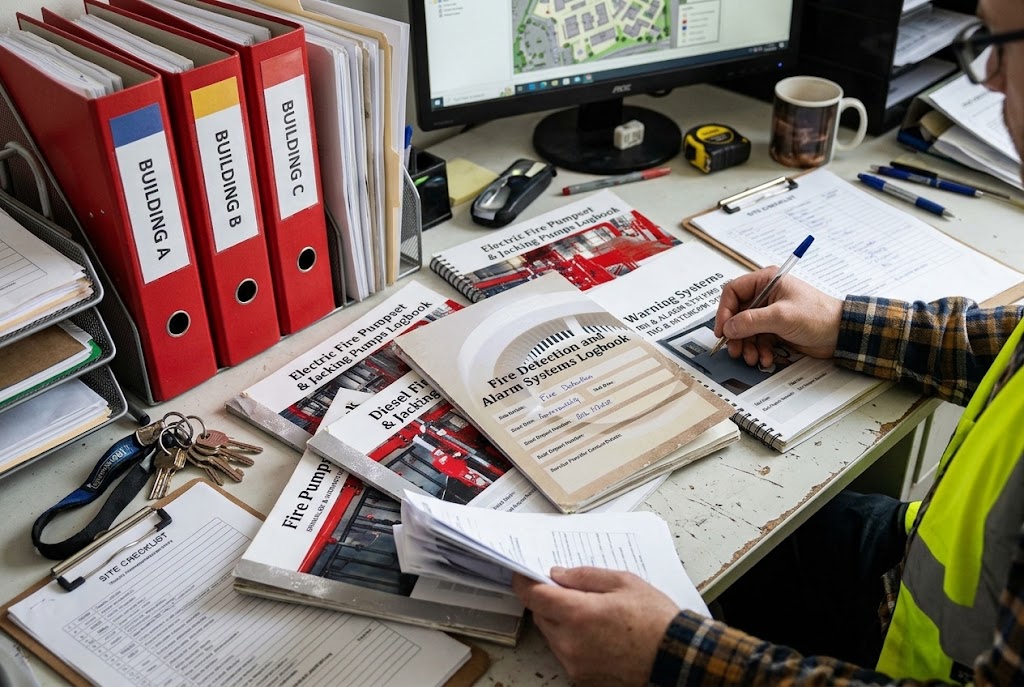
Selection of multi building fire logbooks should be based on the site’s operational model rather than a single universal format. A small campus with one maintenance provider may use a digital asset register plus a physical logbook for on site sign off. A larger retail precinct or business park may need separate building logbooks, a central campus register, and digital work orders.
The format should support the indexing model described above. It should include clear headings for building, zone, system, asset, date, findings, and action. It should also allow space for defect follow up without forcing the technician to write over previous entries. Where equipment labels are used, they should match the logbook identifiers so that field teams can verify the asset before testing.
For commercial facilities, FireFactory can be a useful B2B supplier for fire protection products and documentation supplies that support inspection and record keeping. When selecting logbooks, inspection tags, or related documentation products, teams should match the product to the asset type, the storage environment, and the site’s documentation requirements rather than assuming a single product suits every system.
Frequently Asked Questions
How many fire logbooks should a multi building site keep?
A site can use one central register with supporting logbooks for each building or service area. The important requirement is that the structure allows any asset to be traced to a building, zone, system, and inspection record without ambiguity.
Do records need to be available at every building?
Teams should verify the applicable standard, regulation, or site requirement before deciding where records are held. Where requirements expect on site availability, the site should keep the relevant logbook or a controlled access method at that premises.
What is the best way to avoid confusion between similar assets?
Use a unique asset identifier that combines building, zone, system, and equipment number. Pair the identifier with a visible label or digital asset tag so maintenance staff can confirm the correct item before recording an inspection.
Can digital records replace physical fire logbooks?
Digital records can work when they provide reliable on site access, a clear audit trail, and consistent fields for each asset. Many multi building sites use digital systems together with a physical logbook where on site sign off or offline access is practical.
How often should the logbook index be reviewed?
The site should review the index after any building change, asset replacement, system upgrade, or change in maintenance provider. A scheduled review each year also helps catch missing zones, duplicate identifiers, and outdated contact details.
Conclusion
Effective multi building fire logbooks depend on clear indexing, consistent data fields, and verified record requirements. When a site treats campus fire service records as a controlled asset register, it reduces the risk of missed inspections, incorrect asset references, and gaps in compliance evidence.
Contact FireFactory for B2B fire protection products, logbook documentation, and inspection supplies. Our team can help your site match record keeping needs to building type, system coverage, and maintenance access.