Table of Contents
ToggleDoes Your Bushfire Plan Survive Without Power?
Bushfire preparedness is not only about managing fire risks. It also means understanding what happens when the electricity supply is interrupted.
During periods of high bushfire risk, electricity networks may experience outages caused by damaged infrastructure, network protection settings, or other operational conditions. Power interruptions can occur even when a bushfire is not directly affecting a property.
SA Power Networks highlights the importance of preparing for electricity interruptions as part of bushfire planning, including considering alternative power arrangements, portable lighting, charged batteries, and manual access to gates or garage doors.
For commercial and industrial facilities, power outages can also affect fire protection equipment, emergency lighting, access systems, and other essential building services.
Understanding these risks, maintaining fire protection systems, and keeping accurate service records can help building owners and facility managers prepare for unexpected interruptions.
Why Power Outages Matter During Bushfire Conditions
Electricity supply can be interrupted during bushfire conditions for several reasons, including damage to power infrastructure and protective actions taken by electricity networks.
For facilities that depend on electrically powered equipment, an outage can affect normal operations and emergency arrangements.
Potentially affected equipment includes:
- Electrically powered fire pumps and associated controls.
- Emergency and exit lighting systems.
- Fire detection and alarm equipment.
- Powered gates and access systems.
- Communication and monitoring equipment.
However, not all fire protection systems respond to a power outage in the same way.
Some systems have dedicated batteries, diesel-driven equipment, alternative supplies, or other arrangements designed to support operation during a loss of normal power.
The available protection depends on the system design, installation, condition, and applicable requirements.
Facility managers should understand how their essential systems are intended to operate during a power failure.
Fire Pumps and Power Supply Reliability
Fire pumps are an important part of many commercial and industrial fire protection installations.
Depending on the building, they may support sprinkler systems, hydrant systems, or other firefighting water supplies.
Electric Fire Pumps
Electric fire pumps rely on an appropriate electrical supply to operate.
Their power supply arrangements are determined by the approved system design and applicable requirements.
A loss of normal electricity does not necessarily mean that every electric fire pump will stop operating. Some installations have alternative power arrangements or other provisions.
Building owners should confirm the actual design and operating requirements of their systems rather than assume that additional backup equipment is always necessary.
Diesel Fire Pumps
Diesel-driven fire pumps use a diesel engine rather than relying on mains electricity for the pump’s primary driving power.
However, their reliable operation still depends on important supporting components, including:
- Starting batteries.
- Fuel supply.
- Engine controls.
- Cooling and lubrication systems.
- Regular inspection and testing.
A diesel-driven pump should not automatically be considered reliable simply because it does not use mains electricity as its primary power source.
Routine servicing and testing remain essential.
Bushfire Water Pumps and Building Fire Pumps Are Different
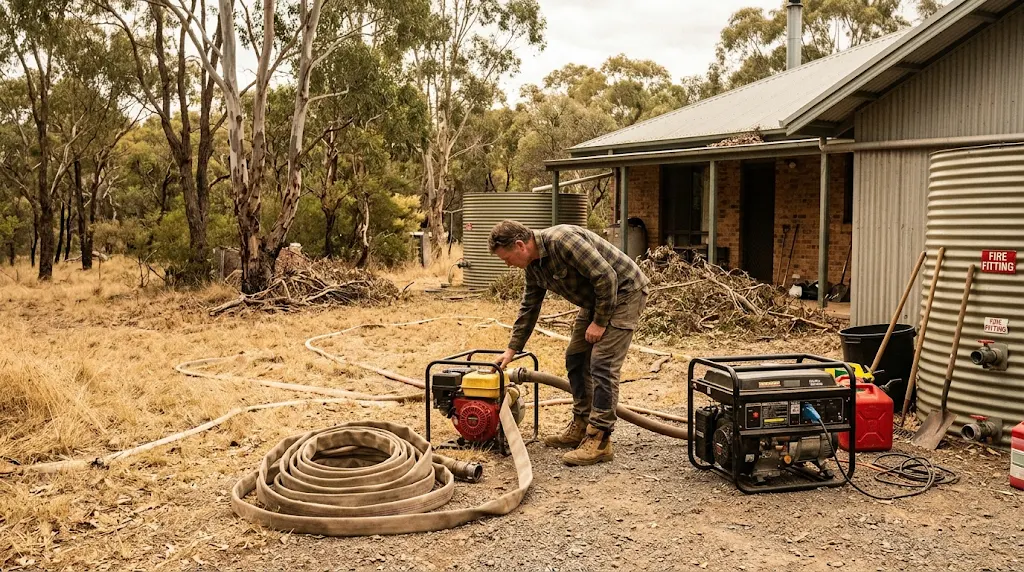
A water pump used for bushfire protection on a rural property is not necessarily the same as a fire pump installed as part of a commercial building’s sprinkler or hydrant system.
These systems may have different designs, operating requirements, and applicable standards.
Any proposed changes to fire pump power supplies, controls, or operating arrangements should be assessed by appropriately qualified professionals.
Emergency Lighting During Power Outages
Emergency lighting is another important consideration when planning for electricity interruptions.
In commercial buildings, emergency and exit lighting systems are intended to support safe movement and evacuation under the conditions for which they were designed.
Depending on the installation, emergency luminaires may use integrated batteries or a central emergency power system.
Routine inspection and testing help identify issues that could affect their operation.
Common maintenance concerns include:
- Battery deterioration.
- Damaged luminaires.
- Charging faults.
- Incorrect operation during testing.
- Obstructed exit signs.
- Incomplete maintenance records.
Emergency lighting installed in a building should not be confused with portable torches or temporary lighting used during bushfire preparation.
Portable lighting can be useful for general emergency readiness, but it does not replace required building emergency lighting systems.
Why Routine Fire Protection Maintenance Matters
Power outages can expose existing equipment problems that may not be obvious during normal operation.
For example, a system with a deteriorated battery, unresolved fault, or defective control component may not perform as intended when operating conditions change.
Routine maintenance helps identify these issues before an emergency.
For commercial fire protection systems, maintenance activities may include:
| Equipment | Maintenance considerations |
|---|---|
| Electric fire pumps | Pump operation, controls, electrical supply arrangements, pressure readings and identified defects |
| Diesel fire pumps | Starting batteries, engine operation, fuel system, controls and test results |
| Fire detection and alarm systems | Panel condition, power supply, batteries, fault indications and alarm functions |
| Emergency lighting | Battery condition, functional operation, testing results and identified defects |
| Fire sprinkler systems | Water supply, valves, pressure readings, alarms and associated equipment |
The actual inspection and testing requirements depend on the system type, applicable standards, legislation, and approved building arrangements.
Maintenance should be carried out by appropriately competent personnel.
Australian Standards and Fire Safety Maintenance
Several Australian Standards are relevant to fire protection equipment and emergency lighting.
AS 1851 — Routine Service of Fire Protection Systems and Equipment
AS 1851 provides requirements for routine servicing of relevant fire protection systems and equipment, including applicable inspection, testing, maintenance, and recordkeeping activities.
AS 2293.2 — Emergency Evacuation Lighting for Buildings
AS 2293.2 addresses inspection and maintenance requirements for emergency evacuation lighting systems.
AS 2941 — Fixed Fire Protection Installations — Pumpset Systems
AS 2941 addresses requirements relating to fire protection pumpset systems.
These standards have different purposes. They should not be treated as interchangeable.
The applicable editions and requirements must be confirmed against the relevant jurisdiction, building approvals, and installation details.
Fire Pump Maintenance Logbooks and Recordkeeping
An important part of fire protection maintenance is keeping accurate records.
Inspection and testing records help maintenance contractors and building owners understand the condition of equipment, identify recurring faults, and track corrective actions.
For fire pump systems, records may include:
- Pump operating results.
- Pressure and flow readings.
- Starting and operating conditions.
- Battery inspection results, where applicable.
- Identified defects.
- Corrective actions and follow-up work.
- Service dates and responsible personnel.
These records are particularly useful when reviewing equipment readiness or investigating an unexpected failure.
Fire Factory Australia Fire Pump Logbooks
Fire Factory Australia supplies dedicated fire safety logbooks for Australian fire protection contractors and maintenance teams.
Relevant products include:
Diesel Fire Pumpset Logbook
Designed to support routine service recordkeeping for diesel fire pumpset systems, including applicable operating checks, battery inspections, testing results, and defect records.
Electric Fire Pumpset Logbook
Designed for recording routine inspection and testing activities for electric fire pumpsets, including operating results, pressure readings, faults, and corrective actions.
These logbooks support maintenance documentation but do not replace the required servicing or testing of fire protection equipment.
Explore Fire Factory Australia Fire Safety Logbooks for available products and specifications.
Practical Steps to Prepare Fire Safety Systems for Power Outages
Commercial building owners and facility managers can take several practical steps to improve preparedness.
1. Identify Essential Fire Safety Equipment
Prepare an accurate list of fire protection and emergency systems installed at the property.
Identify which systems rely on electricity and how they are intended to operate during an interruption.
2. Confirm Existing Power Arrangements
Review the approved design and documentation for fire pumps, alarm systems, and emergency lighting.
Do not assume that a system has backup power or requires additional backup equipment without checking its design.
3. Review Maintenance Records
Check recent inspection and testing records for outstanding defects, failed tests, and incomplete corrective actions.
Ensure that identified problems have been addressed by appropriately qualified personnel.
4. Check Emergency Access Arrangements
Where gates, doors, or other access systems depend on electricity, confirm the approved procedures for operation during a power outage.
Staff should understand the relevant emergency procedures without attempting unsafe electrical or mechanical modifications.
5. Review Emergency Procedures
Ensure that emergency plans address potential power interruptions and reflect the actual systems installed at the facility.
For bushfire-specific planning, follow current advice from the relevant fire authority and electricity network operator.
6. Maintain Accurate Documentation
Keep relevant inspection records, equipment information, maintenance reports, and corrective action details available to authorised personnel.
Clear documentation supports ongoing maintenance and future reviews.
Frequently Asked Questions
Can bushfire conditions cause power outages even when no fire is nearby?
Yes. Electricity networks may experience interruptions due to damaged infrastructure, protective network settings, or other conditions associated with elevated bushfire risk.
Do all electric fire pumps need a separate backup generator?
Not necessarily. Fire pump power supply requirements depend on the approved system design and applicable requirements. Any proposed changes should be assessed by appropriately qualified professionals.
Can diesel fire pumps operate without mains electricity?
Diesel fire pumps use diesel engines as their primary driving power, but their operation still depends on supporting components such as starting batteries, fuel, and controls.
Why are fire pump maintenance records important?
Maintenance records document inspection and testing results, identify defects, and help contractors and building owners track equipment condition and corrective actions.
Does emergency lighting work during a power outage?
Emergency lighting systems are designed to operate under specified emergency conditions, subject to their configuration and condition. Routine testing helps verify their performance.
Which Australian Standard covers routine fire protection maintenance?
AS 1851 addresses routine servicing of relevant fire protection systems and equipment. Other standards may apply to specific equipment and installation requirements.
Does Fire Factory Australia supply fire pump maintenance logbooks?
Yes. Fire Factory Australia supplies dedicated maintenance logbooks for diesel and electric fire pumpset systems, along with other fire safety logbooks for Australian trade customers.
Conclusion
Bushfire preparedness should account for the possibility of electricity interruptions, including outages that occur before a fire reaches a property.
For commercial and industrial facilities, understanding the power arrangements of fire pumps, alarm systems, emergency lighting, and access equipment is an important part of emergency planning.
Routine servicing, appropriate testing, and accurate maintenance records help building owners and contractors identify potential problems and manage fire protection equipment responsibly.
Fire Factory Australia supports Australian fire protection contractors with fire safety equipment and dedicated maintenance logbooks.
Explore our Fire Safety Logbooks or contact Fire Factory Australia for product information and availability.
Source: SA Power Networks — Does Your Bushfire Plan Survive Without Power?