Table of Contents
ToggleCommercial Kitchen Fire Protection: A Practical Guide to Safer Kitchens
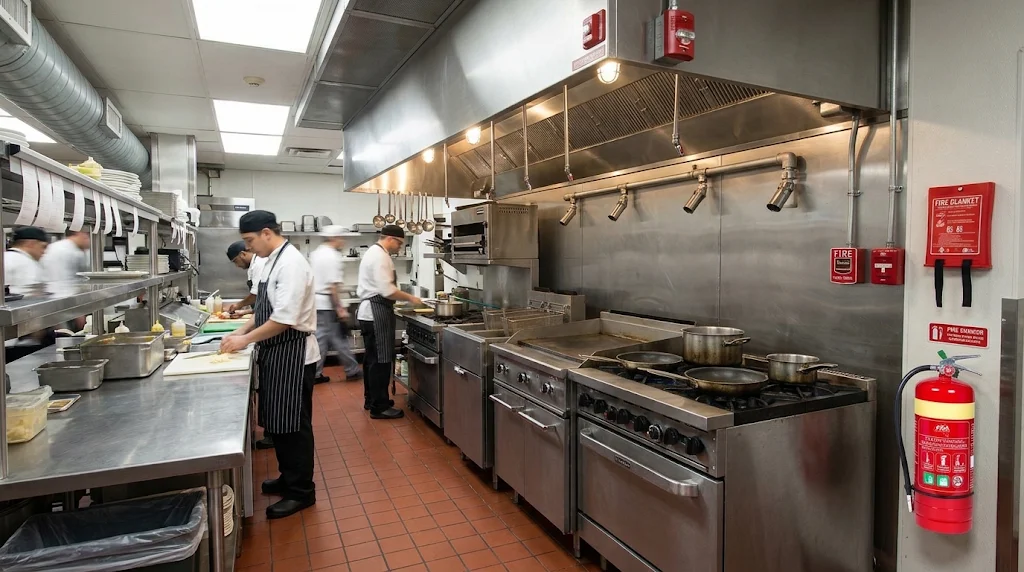
Commercial kitchens are busy environments where high temperatures, cooking oils, grease, and electrical equipment can increase the risk of fire. Restaurants, cafés, hotels, catering facilities, and commercial food preparation areas all need reliable fire protection measures to help protect staff, customers, equipment, and property.
Choosing the right fire protection equipment is an important part of maintaining a safer commercial kitchen.From fire extinguishers and fire blankets to specialised kitchen fire suppression systems, every component has a role in reducing fire risks and supporting emergency response.
At Fire Factory Australia, we encourage business owners, kitchen operators, and fire protection professionals to assess their kitchen environments carefully and select suitable fire safety equipment based on their specific needs.
This guide explains the main fire risks in commercial kitchens, the types of protection available, and the important factors to consider when selecting and maintaining fire safety equipment.
Understanding Fire Risks in Commercial Kitchens
Commercial kitchens face different fire hazards compared with ordinary workplaces. Cooking equipment operates at high temperatures, while oils, fats, grease deposits, and electrical appliances can create conditions where fires develop quickly.
Some of the most common fire risks include:
- Cooking oils and fats: Deep fryers, grills, and other cooking equipment can reach temperatures that may ignite cooking oils.
- Grease accumulation: Grease deposits in extraction hoods, filters, and ductwork can contribute to fire spread.
- Electrical equipment: Damaged wiring, faulty appliances, and overloaded electrical systems can create ignition hazards.
- Open flames and hot surfaces: Gas burners, ovens, and cooking surfaces require careful operation and maintenance.
- Poor cleaning and maintenance: Grease buildup, blocked ventilation, and neglected equipment can increase fire risks.
Understanding these hazards is the first step towards selecting suitable fire protection equipment.
Essential Fire Protection Equipment for Commercial Kitchens
A well-protected commercial kitchen may require several types of fire safety equipment. Each serves a different purpose, and the correct combination depends on the kitchen layout, cooking activities, and applicable safety requirements.
1. Commercial Kitchen Fire Suppression Systems
Kitchen fire suppression systems are designed to respond to fires involving cooking appliances and associated extraction equipment.
Depending on the system design, protection may cover cooking surfaces, extraction hoods, and ductwork.
Specialised systems commonly use wet chemical extinguishing agents to help control cooking oil and fat fires. Some systems also provide automatic activation, allowing the equipment to respond when specified fire conditions are detected.
When selecting a kitchen fire suppression system, we recommend considering:
- The type and arrangement of cooking appliances.
- The size and configuration of extraction hoods and ducts.
- The required protection and nozzle coverage.
- Automatic and manual activation arrangements.
- Compatibility with the kitchen’s ventilation and energy shut-off controls.
- Inspection, maintenance, and servicing requirements.
Our recommendation: Always have a suitably qualified fire protection professional assess the kitchen before selecting or installing a fixed fire suppression system. Equipment selection and installation should follow the system manufacturer’s instructions and applicable Australian requirements.
2. Fire Extinguishers for Commercial Kitchens
Portable fire extinguishers provide an important means of responding to certain small fires when it is safe to do so.
However, not all fire extinguishers are suitable for every type of kitchen fire.
For example, fires involving cooking oils and fats require special consideration. Wet chemical extinguishers designed and rated for Class F fires are commonly used for this type of hazard.
Other fire risks, including electrical equipment and ordinary combustible materials, may require different extinguisher types.
We recommend:
- Selecting extinguishers based on the fire hazards present.
- Checking the extinguisher’s fire classification and suitability.
- Installing extinguishers in accessible, clearly identified locations.
- Providing appropriate staff training.
- Maintaining extinguishers in accordance with applicable servicing requirements.
Never use water on a burning cooking oil or fat fire. Water can cause burning oil to spread violently, creating a serious risk of injury.
3. Fire Blankets
Fire blankets can provide an additional layer of protection in certain kitchen situations.
A suitable fire blanket may help extinguish a small, contained cooking fire by covering the flames and limiting the oxygen supply, provided the fire is within the blanket’s intended use and can be approached safely.
Fire blankets may also be useful for certain clothing fires, depending on the situation and appropriate emergency procedures.
When choosing a fire blanket, consider its size, applicable standard, mounting location, and accessibility.
Our recommendation: Install fire blankets where they can be reached quickly without requiring staff to move towards or through a fire. Staff should understand their limitations and when evacuation is the safer option.
4. Fire Detection and Emergency Equipment
Fire protection is not limited to extinguishing equipment.
Depending on the building and kitchen configuration, other important safety measures may include:
- Fire detection and alarm systems.
- Emergency lighting and exit signs.
- Fire-rated doors and passive fire protection.
- Suitable fire safety signage.
- Emergency evacuation procedures.
- Appropriate electrical and gas safety controls.
These measures should work together as part of the facility’s overall fire safety strategy.
How to Choose the Right Fire Protection for Your Kitchen
Every commercial kitchen is different. A small café may have very different fire protection needs from a large restaurant, hotel kitchen, or industrial catering facility.
Before purchasing equipment, we recommend reviewing the following factors.
| Key factor | What to consider |
|---|---|
| Cooking equipment | Fryers, grills, ovens, ranges, and other heat-producing appliances |
| Cooking materials | Oils, fats, grease, and other combustible materials |
| Kitchen layout | Appliance positions, available space, exits, and access |
| Extraction systems | Hood design, grease filters, and ductwork |
| Fire protection equipment | Suitable extinguishers, blankets, and fixed suppression systems |
| Staff safety | Training, emergency access, and evacuation procedures |
| Maintenance | Inspection schedules, servicing access, and documentation |
| Compliance | Applicable Australian Standards, building requirements, and local regulations |
A professional fire risk assessment can help identify which protection measures are appropriate for the site.
Installation and Equipment Placement
Even suitable fire protection equipment may be less effective if it is incorrectly installed or difficult to access.
For portable extinguishers and fire blankets, placement should consider visibility, accessibility, the type of hazard, and safe escape routes.
Fixed kitchen suppression systems require additional technical considerations, including appliance coverage, nozzle positioning, detection arrangements, and connections to relevant controls.
We recommend ensuring that:
- Fire safety equipment is selected for the identified hazards.
- Installation follows applicable requirements and manufacturer instructions.
- Manual activation points are accessible and clearly identified.
- Fire extinguishers and blankets are correctly mounted and identified.
- Staff receive suitable training in emergency response and equipment limitations.
- Installation and maintenance documentation is retained.
Changes to cooking equipment or kitchen layouts should also trigger a review of existing fire protection arrangements.
Inspection and Maintenance: Keeping Your Kitchen Protected
Regular inspection and maintenance are essential for reliable fire protection.
Commercial kitchens expose equipment to heat, moisture, grease, cleaning chemicals, and frequent activity. Over time, these conditions can affect the performance and accessibility of fire safety equipment.
Important maintenance considerations include:
- Checking portable extinguishers for damage, obstruction, and service status.
- Confirming fire blankets are accessible and their containers are in good condition.
- Inspecting suppression system components for damage, contamination, or obstruction.
- Maintaining extraction hoods, grease filters, and ductwork.
- Checking that required safety signs remain visible.
- Recording inspections, defects, repairs, and corrective actions.
Fixed suppression systems should be inspected and serviced by appropriately qualified personnel in accordance with applicable requirements and manufacturer instructions.
Our recommendation: Keep clear, up-to-date maintenance records. A structured fire safety logbook can help facility managers and fire protection contractors track completed services, identify outstanding defects, and maintain a reliable service history.
Explore Fire Factory Australia’s Fire Safety Logbooks for fire protection maintenance documentation.
Australian Standards and Fire Safety Compliance
Commercial kitchen fire protection should be assessed against the applicable Australian Standards, National Construction Code (NCC), state and territory requirements, and relevant equipment specifications.
Depending on the equipment and application, relevant standards may include:
- AS 3772 – Pre-engineered fire protection systems for cooking equipment.
- AS 2444 – Portable fire extinguishers and fire blankets: selection and location.
- AS 1851 – Routine servicing of fire protection systems and equipment.
- AS/NZS 3504 – Fire blankets.
- AS 5062 – Fire protection for mobile and transportable equipment, where applicable.
Not every standard applies to every kitchen or every piece of equipment. Requirements depend on the building, equipment, installation, and relevant regulatory framework.
Business owners and contractors should confirm the applicable requirements with qualified fire protection professionals and relevant authorities before purchasing or installing equipment.
Common Mistakes to Avoid
Some commercial kitchen fire safety problems can be prevented through better equipment selection and maintenance planning.
Choosing the wrong extinguisher: An extinguisher suitable for one type of fire may be ineffective or dangerous when used on another. Always check its fire classification.
Blocking access to equipment: Fire extinguishers, blankets, and manual activation points should remain accessible.
Ignoring changes to kitchen equipment: Replacing or relocating fryers, grills, or other appliances may affect existing suppression coverage.
Neglecting grease cleaning: Grease accumulation in extraction systems can create serious fire hazards.
Missing maintenance records: Incomplete service documentation can make it difficult to identify defects, track corrective actions, or demonstrate that required maintenance has been completed.
Relying only on portable equipment: Larger or higher-risk kitchens may require additional protection, including fixed suppression systems, depending on their design and applicable requirements.
Frequently Asked Questions
What fire extinguisher is recommended for a commercial kitchen?
The correct extinguisher depends on the fire hazards present. Wet chemical extinguishers rated for Class F fires are commonly used where cooking oils and fats create a fire risk. Other hazards may require different extinguisher types.
Does every commercial kitchen need a fire suppression system?
Not necessarily. Requirements depend on factors such as cooking equipment, building design, extraction arrangements, and applicable regulations. A qualified fire protection professional should assess the specific kitchen.
Are fire blankets necessary in commercial kitchens?
Fire blankets may form part of a kitchen’s fire protection equipment, depending on the identified hazards and applicable requirements. They should be appropriately selected, installed, and maintained.
How often should commercial kitchen fire protection equipment be serviced?
Servicing frequency depends on the equipment type, applicable standards, regulatory requirements, and manufacturer instructions. A qualified service provider should establish the correct maintenance schedule.
Can a kitchen layout change affect fire suppression coverage?
Yes. Moving or replacing cooking appliances can change the areas that require protection. Existing suppression systems should be reviewed whenever significant kitchen modifications occur.
Why are fire safety logbooks important?
Fire safety logbooks help document inspections, testing, servicing, identified defects, and corrective actions. They support maintenance planning and provide an organised history of fire protection equipment.
Protect Your Commercial Kitchen with the Right Fire Safety Equipment
Effective commercial kitchen fire protection starts with understanding the risks and selecting suitable equipment.
From portable fire extinguishers and fire blankets to fixed suppression systems and maintenance documentation, each component contributes to a safer working environment.
At Fire Factory Australia, we recommend taking a practical approach: assess the hazards, select appropriate equipment, follow applicable Australian requirements, and maintain clear inspection and service records.
We supply a range of fire protection products and accessories for Australian fire protection companies, electrical contractors, facility managers, and commercial businesses.
Whether you are purchasing fire safety equipment for a new kitchen or reviewing existing protection, our team can assist with product information and available supply options.
Need fire protection products for your commercial kitchen?
Contact Fire Factory Australia to discuss your requirements, request product information, or enquire about availability.
Fire Factory Australia – Your Partner in Fire Protection Products.