Table of Contents
ToggleWhat Should Happen When a Fire Service Logbook Is Full?
Quick Answer: When a fire logbook is full, staff should start a continuation record that preserves equipment IDs, dates, results, and previous entries. Verify the applicable Australian standard or client retention schedule, confirm the form capacity, and file the completed book before commencing a new register.
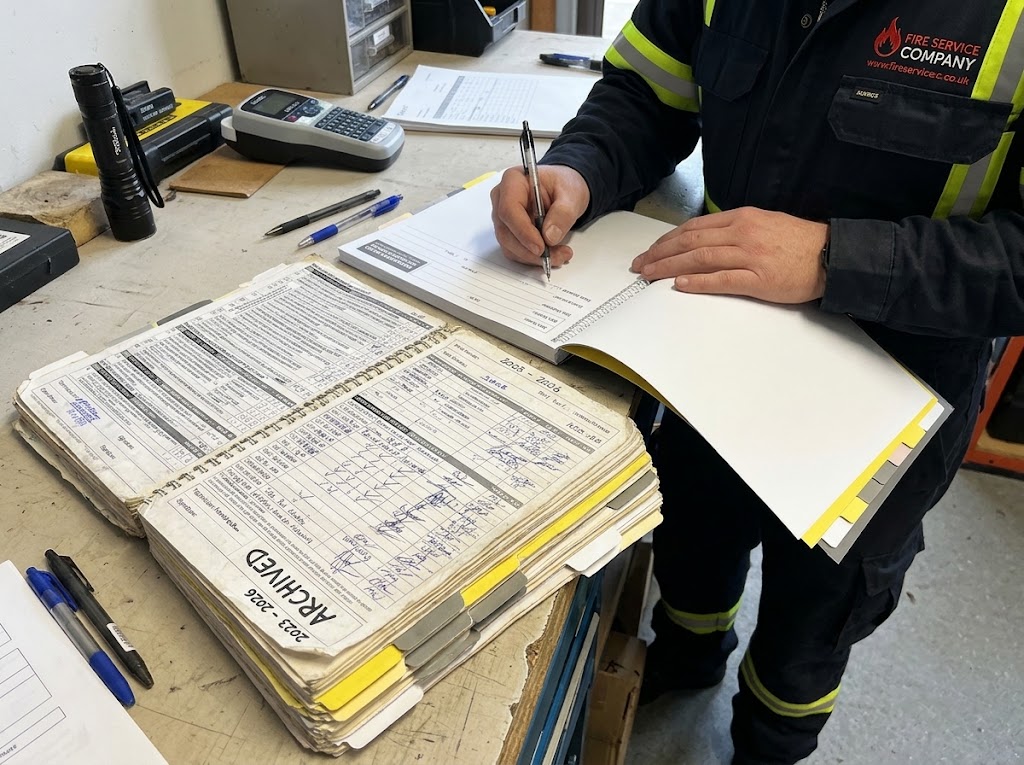
A full fire service logbook is a routine event in active fire protection maintenance. It signals that the current record has reached the end of its usable capacity, not that the compliance history can be stopped or overwritten. A controlled handover protects the integrity of service records, supports traceability for auditors, service providers, and facility managers, and keeps equipment history aligned with the assets installed in the facility. For B2B sourcing, contact the FireFactory team.
Why a Full Fire Logbook Requires a Controlled Handover
A fire service logbook records service events for protected assets, including inspection, testing, maintenance, defects, corrective actions, and the equipment status after the service event. When the book is full, the next entries need a clear reference to the previous record. Without that reference, an equipment ID may lose its service trail, and a later reviewer may be unable to confirm what was tested, when it was tested, and what condition was found.
Commercial facilities increase the need for control. Multiple service providers may attend the site, equipment may be added or removed, and tenancies may change. A continuation record keeps the asset list stable and makes it easier for fire companies, electrical companies, and facility managers to demonstrate continuity. Retail facilities add another layer of control because stock, refit, and tenancy changes can alter the protected equipment list.
Start a Continuation Record When the Fire Logbook Full Capacity Is Reached
The safest approach is to treat the completed logbook as a closed record and begin a continuation record that carries the asset IDs and history forward. The new record should identify the previous book, the date the previous book closed, and the reason for continuation. This creates a readable chain rather than a separate, unconnected file.
- Record the final entry in the completed book and mark the book as closed.
- Start a new logbook or continuation record with the same equipment IDs.
- Carry forward asset descriptions, locations, and any ongoing defects or corrective actions.
- Reference the previous logbook number, closure date, and storage location.
- Add an additional equipment register when assets are added, removed, or reclassified.
An additional equipment register is useful when the facility list changes. It keeps the main logbook focused on service events while still showing when equipment changed. The register should use the same ID format as the logbook so that history remains traceable.
Verify Retention Requirements and Actual Form Capacity
Before disposing of, archiving, or replacing a full logbook, verify the applicable retention requirements. The exact clause and retention interval should be checked against the relevant standard or client requirement before a decision is made.
The actual form capacity also matters. A logbook that appears full may have different page counts, entry blocks, or asset columns. Confirm how many entries the completed book holds and whether the new book supports the same equipment count and service frequency. This prevents a second full condition before the service cycle has finished.
The Standards Australia catalogue search can locate the relevant standard title, but the source is a catalogue locator, not the full standard text. Obtain the current relevant standard or an official technical guide before applying detailed requirements or quoting specific intervals.
Common Failure Points When Logbook Handover Is Poorly Managed
Most recordkeeping failures come from a gap between the completed book and the new book. The equipment remains protected, but the paper trail becomes weak. Common failure points include:
- Missing or inconsistent asset IDs across the old and new records.
- No reference to the previous logbook number or closure date.
- Ongoing defects copied incorrectly or left out of the continuation record.
- Unclear ownership of the closed book, especially when storage is shared.
- A new book with fewer usable entries than the previous book.
- Late handover, which causes missing dates or duplicated service entries.
These failures reduce confidence during audits and can create unnecessary rework. A simple continuity check at the start of each service visit helps catch the issue before it becomes a compliance gap.
Practical Selection and Purchasing Considerations
When replacing a logbook or introducing an additional equipment register, the product should match the site’s equipment count and service pattern. Selection should be based on usability, not only price.
- Choose a format with enough entry blocks for the expected service interval.
- Use consistent fields for asset ID, location, description, result, and corrective action.
- Include a cover page or index for the logbook number, closure date, and storage location.
- Select a durable cover and binding for regular site use.
- Match the register format to the existing asset ID system.
FireFactory supports Australian fire companies, electrical companies, and commercial facilities by sourcing replacement logbooks, additional equipment registers, and related fire protection documentation for B2B customers.
Frequently Asked Questions
What should a fire company do when a fire logbook is full?
Close the completed logbook and start a continuation record that preserves the equipment IDs, dates, results, and previous entries. Reference the old book and confirm the applicable retention requirement before filing or replacing it.
Can a full fire service logbook be discarded?
Only after verifying the applicable retention requirement and completing a continuity check. If a retention schedule or standard requires the record to be kept, the completed book should be filed and indexed rather than discarded.
What is an additional equipment register?
An additional equipment register is a separate record that tracks assets added, removed, or changed while the main fire logbook continues. It should use the same asset IDs so the equipment history remains traceable.
How does a facility know when a logbook has reached full capacity?
The facility should know the actual form capacity before service begins. If the current book has no remaining usable entries and no clear continuation record exists, staff should stop and start a controlled handover.
Where should Australian businesses check the applicable standard?
Use the Standards Australia catalogue search to locate the relevant standard title. Then obtain the full standard or an official technical guide before applying detailed clauses, intervals, or recordkeeping requirements.
Conclusion: A full fire logbook should trigger a controlled continuation, not a break in service history. Fire companies, electrical companies, and facility managers can maintain traceability by closing the completed book, verifying retention requirements, preserving asset IDs, and starting a new record that references the previous file. Consistent record control supports compliance, reduces rework, and protects the equipment history for future audits.