Table of Contents
ToggleSouth Australian ESP Form 3: What Maintenance Evidence Supports It?
Quick Answer: The SA ESP Form 3 certificate of maintenance fire safety is supported by documented maintenance for installed fire safety systems, including test records, service reports, component condition evidence, and rectification records. It differs from installation compliance because it demonstrates ongoing system readiness rather than initial compliance.
For fire companies, electrical contractors, retailers, and property teams, the SA ESP Form 3 certificate of maintenance fire safety is more than a form. It is a record that a fire safety system has been maintained over time. PlanSA lists Form 3 as the certificate of maintenance in the PlanSA resources and forms context. For component sourcing support, see the FireFactory contact page. The practical issue is whether the supporting evidence matches the certificate. A defensible certificate of maintenance fire safety should show what was inspected, tested, repaired, or replaced, and it should be separate from installation compliance evidence.
SA ESP Form 3: Certificate of Maintenance Fire Safety Evidence
PlanSA identifies Form 3 as the certificate of maintenance. In South Australian fire safety practice, this places the form in the ongoing compliance cycle rather than the initial installation cycle. The form is most useful when it reflects the current condition of a system and the maintenance work completed before the certificate date.
The key distinction is simple. Installation compliance forms support the fact that a system was designed, installed, and commissioned. A certificate of maintenance fire safety supports the fact that the system was maintained and remains serviceable. This distinction matters because a business may hold a valid installation file and still have an incomplete maintenance record.
What Maintenance Evidence Supports the Form?
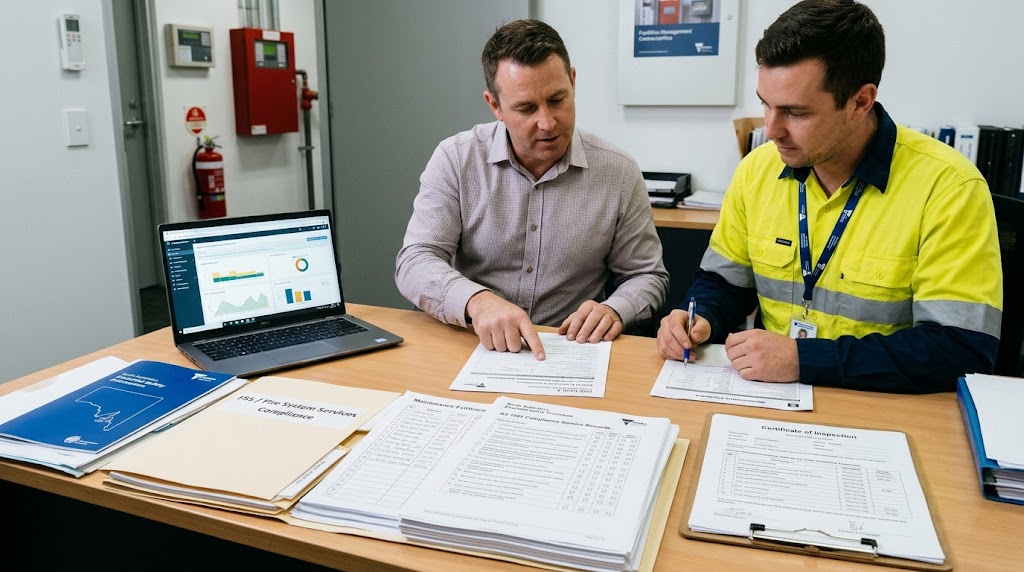
Because the SA ESP Form 3 is a certificate of maintenance, the supporting evidence should show that maintenance activity took place. The exact evidence will vary by system type, location, and applicable requirements, so the most important principle is consistency. The file should make it easy to trace the certificate back to the work performed.
Useful evidence often includes the following:
- Dated inspection and maintenance records for the relevant system or location.
- Test outcomes that show the system was checked against its intended function.
- Service reports that identify the scope of work, the equipment involved, and the result.
- Rectification records that show a fault was identified, assessed, and corrected.
- Component replacement or adjustment records, including exact model and part details where applicable.
- Records of deferred work, temporary measures, or follow up actions.
Where a commercial facility has multiple fire safety systems, the maintenance file should identify the system type, location, and service date. This helps the certificate of maintenance fire safety stand up to review by an insurer, landlord, safety manager, or regulator.
How Maintenance Evidence Differs From Installation Compliance
Installation compliance and maintenance compliance serve different purposes. Installation evidence usually supports the initial fit out, product selection, design review, commissioning, and handover. Maintenance evidence supports ongoing operation, condition, and serviceability.
| Aspect | Installation Compliance | Maintenance Certificate |
|---|---|---|
| Time focus | Initial installation and commissioning | Ongoing operation and condition |
| Primary question | Was the system installed correctly? | Is the system maintained and serviceable? |
| Typical evidence | Design documents, installation records, commissioning reports | Service reports, test outcomes, rectification records |
| Risk if missing | Compliance gap at fit out or handover | Compliance gap in ongoing system care |
A common failure point in compliance files is mixing these two record sets. When installation documents and maintenance records are stored together without clear separation, it becomes harder to prove that a system has been maintained after commissioning. A simple rule is to keep the installation file complete and to build the maintenance file around dated service evidence.
Practical Steps for Fire, Electrical, and Commercial Teams
- Confirm the system scope. Identify the fire safety system, location, equipment, and any related subsystems before completing the certificate. This prevents the form from being broader than the work performed.
- Match the certificate to the maintenance task. The certificate of maintenance fire safety should describe the system that was maintained, not a generic building level statement without supporting detail.
- Record the evidence in one place. Dated work orders, test sheets, service reports, and replacement part records should be easy to locate when the form is reviewed.
- Use exact model evidence for replacements. When a component is changed, retain the model number, part number, supplier details, and installation record. This supports traceability and reduces disputes over product suitability.
- Review common maintenance risk areas. Control panel faults, power supply issues, component wear, obstructed devices, and configuration changes can affect system readiness. The maintenance record should show what was checked and what was corrected.
For fire companies and electrical contractors, this approach supports safe operation and reduces the risk of an incomplete certificate. For retail, hospitality, and office facilities, it also supports a clearer response when a certificate of maintenance fire safety is requested during an audit or lease review.
Commercial and Purchasing Considerations
Commercial facilities often need fire safety systems that remain available through business hours, maintenance windows, and inspection events. The maintenance certificate is only as useful as the records and components that support it.
When replacement components are required, purchasing decisions should support the maintenance evidence trail. FireFactory’s B2B fire protection catalog is a relevant sourcing option for components used in maintenance programs. When selecting parts, businesses should retain exact model information and product documentation that confirms the component is suitable for the installed system.
Useful purchasing practices include:
- Recording the component model, part number, and supplier with the maintenance record.
- Keeping product documentation in the same file as the service report.
- Identifying recurring failures and documenting the corrective action taken.
- Using a central sourcing channel for critical components to reduce downtime.
The SA ESP Form 3 certificate of maintenance fire safety is strongest when the certificate, the work performed, and the retained evidence all tell the same story.
Frequently Asked Questions
What does the SA ESP Form 3 certify?
PlanSA lists Form 3 as the certificate of maintenance. It supports evidence that a fire safety system has been maintained, rather than evidence that it was first installed.
Is the SA ESP Form 3 the same as an installation compliance form?
No, installation compliance forms support initial installation, commissioning, and acceptance. A certificate of maintenance fire safety supports ongoing maintenance and serviceability.
What evidence should be kept with a SA ESP Form 3 certificate of maintenance fire safety?
Useful evidence includes dated inspection records, test outcomes, service reports, rectification records, and component replacement records. The exact evidence should match the system type and any applicable requirements.
Can a fire company complete the form without maintenance records?
The form should not be completed unless the maintenance work is documented and verifiable. A certificate of maintenance fire safety is only as defensible as the records behind it.
Where can businesses find the current PlanSA form context?
Businesses can refer to the PlanSA resources and forms page for the current location of Form 3. That page provides the official South Australian form reference point.