Table of Contents
ToggleHow Should NSW Contractors Reduce Repeat Unwanted Fire Alarms?
Quick Answer: Contractors should treat repeat unwanted fire alarms in NSW facilities as an environmental, design, and maintenance problem. They should document each activation, inspect detector location and air movement, review service history, match detector type to the space, and apply FRNSW workplace fire alarm guidance.
Reducing unwanted fire alarms NSW contractors report requires a structured false alarm prevention approach. A single false activation can point to a contaminated detector, a poorly chosen location, a service gap, or a panel setting that is no longer suitable for the space. For fire companies, electrical companies, and retail operators, the goal is not to silence a device, but to identify the trigger, correct the cause, and keep the fire alarm system reliable for a real emergency. The FireFactory contact page is a practical starting point for contractors who need specification support during the investigation.
Why Repeat Activations Matter for NSW Sites
Repeated unwanted alarms create more than nuisance. They erode confidence in the system, increase response time pressure, and can lead to operators ignoring valid alarms. NSW contractors should therefore treat a pattern of activations as a fire safety performance issue, not a one off maintenance ticket.
The FRNSW automatic fire alarm guidance supports the need for workplace fire safety systems to be managed with clear responsibility, appropriate equipment, and ongoing care. A repeat activation pattern is often easier to resolve when the team separates the event history from the physical environment and then compares both against the detector and panel configuration.
Build a Qualified Investigation Checklist for Unwanted Fire Alarms NSW
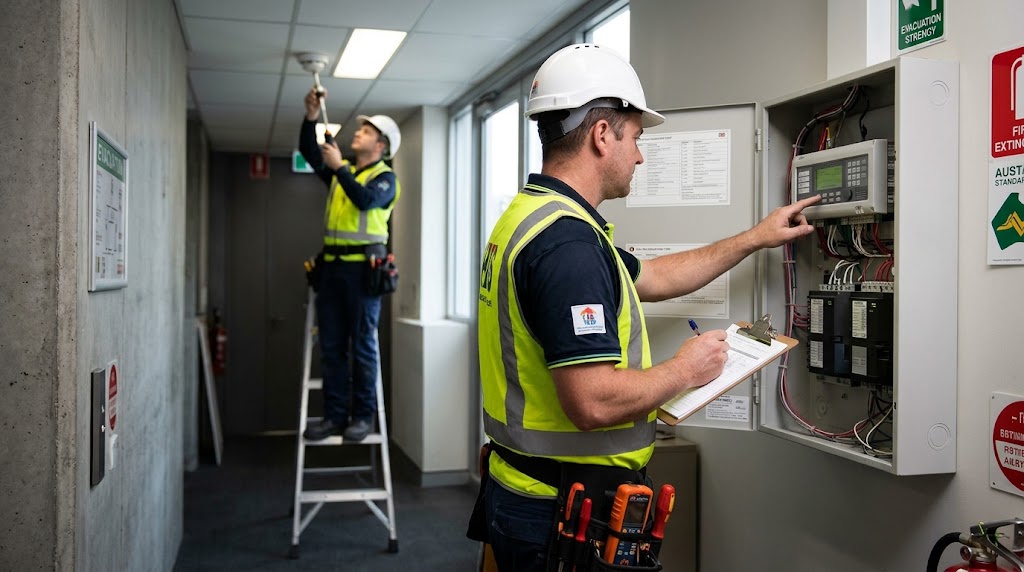
A qualified investigation checklist should record the facts before any equipment is replaced. This keeps the investigation evidence based and helps avoid unnecessary parts changes. Contractors should use the same structure for smoke detector false alarms, heat detector activations, panel faults, and repeated alarm zones.
| Checklist Area | Information to Record | Common Issue to Confirm |
|---|---|---|
| Event history | Date, time, alarm zone, alarm type, response, and whether a fire was confirmed. | One zone repeats at similar times. |
| Environment | Cooking, steam, dust, paint, cleaning, ventilation, and high air movement near detectors. | Detector sits in a path of vapour or draft. |
| Detector condition | Contamination, insects, physical damage, age, and mounting height. | Dust or paint film has altered the sensing response. |
| Detector selection | Device type, model number, base type, and suitability for the space. | A general smoke device is used in a high steam or high dust area. |
| Panel and wiring | Zone mapping, wiring faults, battery or mains faults, and system faults. | A wiring fault produces repeated panel alarm messages. |
| Service history | Last inspection, testing, cleaning, replacement, and any prior corrective action. | Recommended checks were missed or not documented. |
The checklist should be completed by a qualified person familiar with the installed system. If the site has a fire safety schedule or compliance records, those documents should be compared with the actual detector locations and panel settings.
Control Environmental Causes Before Changing Equipment
Many unwanted fire alarms in commercial facilities start with the space, not the detector. Cooking vapour, cleaning chemicals, solder fumes, paint overspray, high humidity, and strong air movement can all influence detector response. Contractors should check the physical environment before assuming the detector is faulty.
Common environmental controls include moving the detector away from a direct source, improving ventilation, using a detector location that is acceptable for the hazard, and confirming that air conditioning or exhaust fans do not push contaminants into the sensing area. In retail kitchens, laundries, workshops, and warehouses, the detector location should be reviewed against the actual day to day operations, not only the original design layout.
If an environment cannot be made suitable for the current detector type, the design may need to change. This can mean selecting a different detection principle, using a combination device, or reviewing the detection strategy with the site owner and the responsible fire protection provider.
Match Detector Selection, Service History, and B2B Supply
False alarm prevention also depends on using the right detector for the space. A device that is difficult to service, incompatible with the panel, or poorly matched to the hazard will create repeated work. Contractors should verify the exact model number, base compatibility, and panel support before ordering replacement parts.
Service history is a strong indicator of future performance. If a detector has been repeatedly cleaned, relocated, or faulted, replacement or a design review may be more effective than another temporary adjustment. When selecting parts for a job, FireFactory B2B supply can help contractors compare compatible detectors, bases, panels, and accessories for Australian fire protection systems.
Frequently Asked Questions
What should NSW contractors do when the same alarm zone activates twice?
Record the alarm details, inspect the detector and surrounding environment, and review the service history. If the cause is not obvious, check the panel zone mapping, wiring, and detector model suitability before replacing the device.
Is it safe to replace a detector after a false alarm?
Replacement may be appropriate if the detector is damaged, contaminated, aged, or incompatible with the space. However, the contractor should first confirm whether the trigger is environmental, wiring related, or a design issue that will repeat with a new detector.
Which environmental factors cause the most false fire alarms?
Cooking vapour, steam, dust, paint or chemical fumes, insects, humidity, and strong air movement are common causes. The detector location should be checked against these sources and adjusted only when it remains compliant and safe.
How does service history help with unwanted fire alarms NSW sites report?
Service history shows whether a detector has been cleaned, relocated, faulted, or tested in the past. That pattern helps the contractor decide whether the issue is maintenance related, environmental, or a result of unsuitable equipment selection.
Should FireFactory parts be used for fire alarm repairs?
FireFactory is relevant when contractors need B2B fire protection equipment such as compatible detectors, bases, panels, or accessories. The key is to match the exact model, base, and system requirement before installation.
Conclusion: Repeat unwanted alarms are usually a system of small failures: a location problem, a service gap, a detector mismatch, or a wiring fault. NSW contractors reduce risk by documenting the event, investigating the environment, verifying detector suitability, and keeping service records accurate. This approach supports false alarm prevention while keeping the fire alarm system dependable.
FireFactory supplies B2B fire protection equipment for contractors, fire companies, and commercial maintenance teams. Contact FireFactory for model matching, compatible parts, and specification support before placing an order.