Table of Contents
ToggleNobody enjoys evacuating a building only to discover the café on the ground floor is still frying bacon. Yet that scene plays out every few minutes around Australia. Each time an alarm dialler rings triple-zero, crews roll, traffic stops and invoices follow. Fire and Rescue NSW responded to roughly 50 000 automatic fire alarm activations in 2023, and about 98 percent were false; after one grace call in any 60-day window, every extra mis-fire attracts a $1 600 charge.
Queensland follows a comparable scheme. Under its Alarm Monitoring Agreement the unwanted-alarm fee for 2024-25 sits at $1 456.10. A shopping centre with a temperamental detector can rack up several invoices in one afternoon, while a busy strata tower may bleed tens of thousands each year. The figure is deliberately painful: authorities want owners to fix the root cause rather than keep paying penalties.
The human cost of ringing wolf
Money is only part of the story. Safety specialists warn of false alarm fatigue — the tendency for occupants to hesitate once they have endured too many nuisance evacuations. A 2022 review of Australian and New Zealand data notes that repeated mis-fires slow evacuation, increase risk-taking and tie up crews who might be needed elsewhere. Volunteer firefighters, already juggling day jobs, report burnout from fruitless turn-outs.
Why ionisation detectors keep crying foul
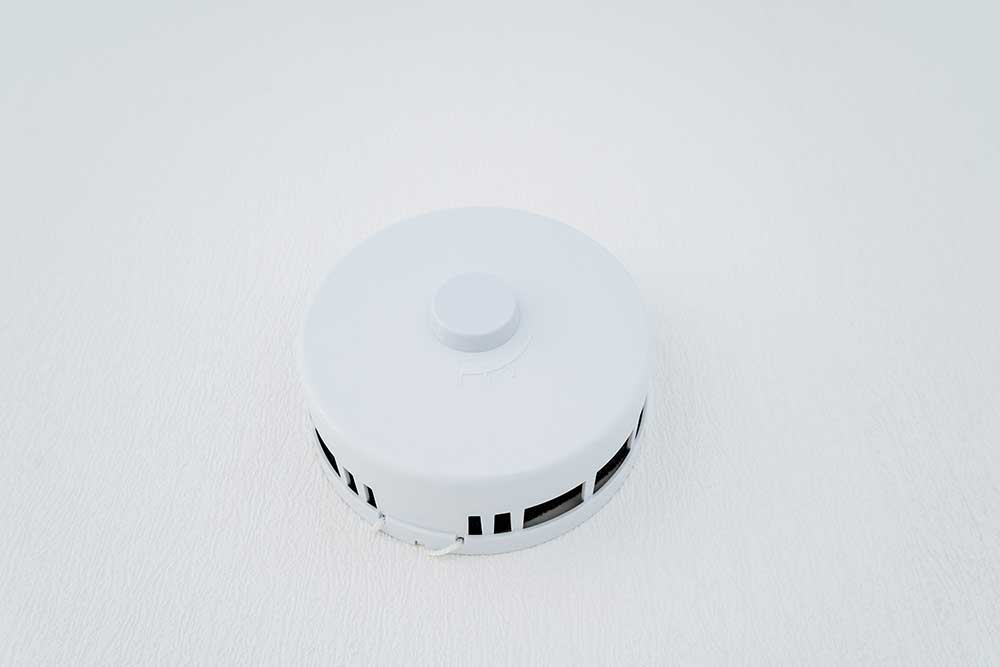
Much of the problem begins with sensor type. The ionisation detector, a 1960s invention containing a speck of radioactive material, reacts to minute combustion particles from flaming fires. Unfortunately, it reacts just as eagerly to aerosols from burnt toast, hair spray or shower steam. Photoelectric detectors work differently: a harmless light beam scatters off larger smoke particles from smouldering material and ignores most water vapour. Australian fire-protection firms and state health agencies agree that quality photoelectric alarms trigger far fewer nuisance calls than ionisation units.
Regulation is catching up
Legislators have started to back the better performer. Since 1 January 2022 every Queensland property offered for lease or sale must be fitted with interconnected photoelectric alarms in all bedrooms, hallways and on every level; by 2027 the rule will apply to every dwelling, new or old. Similar preferences appear in guidance from other state fire authorities, and many insurers now ask owners to document detector type before renewing policies.
Counting the dollars
Consider a hypothetical suburban shopping centre that suffered eight false activations last year. In New South Wales that equals $12 800 in direct penalties. A bulk upgrade to photoelectric heads might cost $40 000, but if it trims nuisance calls by 90 percent — a reduction commonly reported by maintenance contractors — the pay-back period is about three years. That figure ignores the hidden savings: unjammed loading docks, uninterrupted trading and no late-night social-media posts from angry tenants.
Buying smart without breaking the budget
For facilities managers eyeing an upgrade, price and provenance still matter. Photoelectric units that conform to AS 3786-2014 and carry a ten-year lithium battery are widely available in Australia’s commercial channel. Fire Factory stocks models sourced through PSA smoke alarm wholesale catalogues, giving contractors a one-stop shop for compliant heads, relay bases and wireless modules. Where volume is high, the team can often match a PSA smoke alarm wholesale price quoted in larger tenders, easing capital budgets.
Making the change stick
Hardware alone will not end nuisance calls. A successful program generally includes:
- locating detectors away from toasters, bathrooms and air-conditioning vents
- quarterly cleaning or replacement of dusty heads in car parks and workshops
- staff training — reminding tenants to switch on extractor fans before cooking
- prompt investigation of every activation, genuine or otherwise, so patterns emerge early.
A quieter future for 000 crews
False alarm fatigue is not inevitable. Switching to photoelectric technology from PSA smoke alarm suppliers, installing it to code and servicing it on schedule safeguards budgets as surely as it safeguards lives. The pay-off is immediate: fewer midnight evacuations, less strain on emergency services and a siren people trust when it really matters. For building owners, that is one upgrade where the calculator and the conscience agree.
Frequently Asked Questions
1. Why are photoelectric smoke alarms less prone to nuisance activations than ionisation models?
Photoelectric detectors rely on a light-scattering chamber that registers the larger particles released by slow, smouldering fires. Steam, aerosol spray and toaster smoke rarely trigger that mechanism, whereas ionisation cells misread such vapours as combustion. Fewer nuisance trips translate into calmer occupants, reduced evacuation disruptions and substantially lower emergency-service invoices.
2. How do unwanted 000 call-out fees build up for building owners?
Most state agreements give premises one grace activation in any sixty-day window. Every further false call attracts a charge—currently about $1 600 in New South Wales and $1 456 in Queensland. A busy site plagued by steam or cooking fumes can easily generate multiple alarms a week, rapidly compounding costs.
3. Are photoelectric alarms mandatory throughout Australia?
Queensland already requires interconnected photoelectric alarms in all bedrooms, halls and storeys for sales or leases, with universal retrofit due by 1 January 2027. Jurisdictions endorse the technology through building codes, insurance questionnaires and public-housing specifications. While not yet nationally mandated, market and regulatory momentum favours photoelectric over ionisation units.
4. What practical steps cut nuisance activations after installing photoelectric heads?
Relocate detectors away from kitchens, bathrooms and HVAC outlets. Replace dusty or insect-prone heads, fit protective covers in loading docks and schedule regular quarterly cleaning. Educate tenants about exhaust-fan use, especially during cooking or showering. Log every activation, genuine or otherwise, so technicians can spot repeating patterns before invoices escalate.