
Table of Contents
ToggleACT Smoke Alarm Upgrades for Hearing Needs: What Should Installers Consider?
Quick Answer: Installers should verify ESA approved warning equipment, current eligibility, and exact model evidence before specifying ACT hearing impaired smoke alarms or accessible smoke alarm options in Canberra. Review alarm type, placement, maintenance, and commercial duty requirements. Do not promise universal funding, because assistance applies to eligible residents.
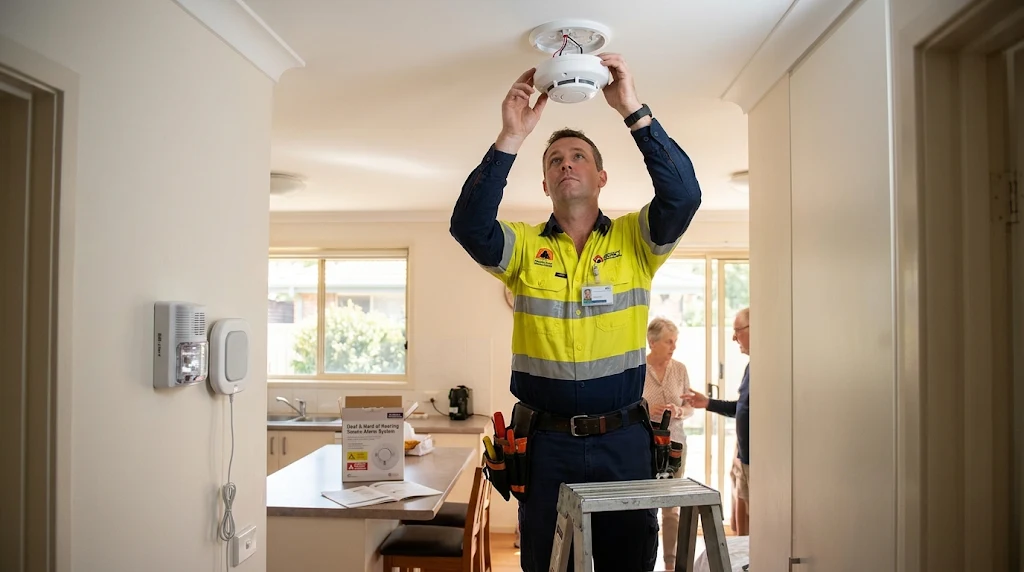
For installers working in the ACT, an upgrade for a resident who is deaf or hard of hearing is a safety decision first. The selected device must fit the occupant, the dwelling, and the official guidance in force at the time of installation. The ACT Emergency Services Agency smoke alarm page describes assistance for eligible deaf or hard of hearing residents. Installers should confirm approved warning equipment and current eligibility, rather than promise universal funding. That same caution applies when choosing an accessible smoke alarm in Canberra or another ACT suburb. For B2B procurement, documentation, or quote support, contact FireFactory before specifying the exact device.
Confirm Eligibility, Approved Equipment, and Model Evidence
Before quoting, installers should collect the current official position from the ACT Emergency Services Agency. The agency describes assistance for eligible deaf or hard of hearing residents, and the project should not assume that funding will apply to every request. A reliable pre installation check includes the client’s eligibility status, the approved warning equipment list, and the exact model that will be installed.
Documentation should record the approved device, the installation date, the location, the test result, and any accessory required for the warning system. Where a commercial client or building owner requests a certificate, the installer should use the format required by that owner, insurer, or project file, and avoid stating unverified compliance claims. The record should match the exact model evidence, not a generic product category. The project should also align with the approved ACT equipment guidance and any current official requirements that apply to the site.
Select and Place the Warning System for the Occupant
A visual alarm, a tactile alarm, or a combination device may suit a resident who cannot rely on sound alone. The mechanism must be chosen from the approved equipment guidance and the occupant’s routine. A bedroom warning device needs to reach the person at night, while a corridor or living area device may support waking in other parts of the home.
- Visual devices should have a clear path to the occupant’s line of sight, and they should not be blocked by furniture, curtains, or storage.
- Tactile devices should be positioned where contact is reliable during sleep or rest, and the occupant should understand how the device operates.
- Combination devices should be checked for each output, because a failed visual or tactile channel can reduce the warning to a single mode.
- Any device should be installed according to the manufacturer’s instructions for power, mounting, spacing, and testing.
Placement depends on the building layout, the resident’s movement pattern, and the risk of smoke reaching key areas. Installers should assess where the occupant sleeps, where cooking occurs, and where a warning can be seen or felt without delay. In a home, the bedroom is the most critical area for a hearing specific upgrade because the occupant may miss an audible alarm while asleep.
In commercial facilities, the question expands to common areas, staffed spaces, tenant areas, and emergency procedures. A building may need more than one warning path, especially where occupants include people with different sensory needs. Installers should coordinate with the building owner, facility manager, and emergency control personnel where applicable. The goal is a system that warns, wakes, and directs movement without depending on one untested point. Installers should avoid relying on a single product claim from a datasheet. The approved list, the exact model evidence, and the manufacturer’s installation document should all agree.
Inspect, Maintain, and Record Common Failure Points
Maintenance should follow the manufacturer’s service interval for the exact model. Installers should not apply a generic interval when the approved documentation states a different check period. A service record should show the date, the tester, the result, the battery or power status, and any corrective action taken.
| Failure Point | Practical Check | Service Note |
|---|---|---|
| Dead or weak battery | Test the alarm output and replace the battery according to the model instructions. | Record the battery type and replacement date. |
| Blocked visual path | Check for furniture, curtains, dust, or obstructions between the device and the occupant. | Adjust placement only if it remains within approved guidance. |
| Tactile contact not reliable | Confirm the device is positioned for consistent contact and is not displaced. | The installer should retrain the occupant if the device changes. |
| Aged or damaged device | Check for cracked housing, failed output, or expired service life. | Replace the unit and update the installation record. |
| Power or wiring fault | Verify the mains supply, battery backup, and any control panel status where fitted. | Use the manufacturer’s fault code or test procedure. |
The service note should remain specific to the model. A generic smoke alarm record is useful, but a hearing specific upgrade should identify the exact warning output and the person who confirmed it.
Purchasing ACT Hearing Impaired Smoke Alarms and Accessible Smoke Alarm Options in Canberra
For fire companies, electrical companies, retail suppliers, and project buyers, procurement should start with the approved equipment and exact model evidence. The buyer should confirm the model, the output type, the power source, the required accessories, and the available documentation. Stock should be checked before the quote is issued, especially where a project depends on a specific approved device.
FireFactory supports B2B buyers across Australia with fire protection products, technical documentation, and order support for installers, electrical companies, and retail accounts. For hearing specific upgrades, FireFactory can help buyers compare compatible devices, accessories, and maintenance supplies while the installer confirms the official ACT guidance. This keeps the commercial order aligned with the approved equipment and the exact model being installed.
Frequently Asked Questions
Does ESA fund every hearing impaired smoke alarm in the ACT?
ESA describes assistance for eligible deaf or hard of hearing residents. Installers should confirm current eligibility and approved warning equipment before quoting. Universal funding is not a safe promise.
What should installers check before installing an accessible smoke alarm in Canberra?
Installers should confirm the resident’s needs, the approved equipment, and the exact model evidence. The installer should use the current ACT Emergency Services Agency guidance and record the installation details for the customer and building owner.
Can a visual alarm replace an audible alarm for a deaf or hard of hearing resident?
A visual alarm may be appropriate, but the correct choice depends on the approved equipment and the occupant’s routine. A tactile or combination device may provide a more reliable warning.
How often should a hearing specific smoke alarm be maintained?
The manufacturer’s interval for the exact model should be used. The service record should show the test date, power status, output check, and any corrective action.
Where can B2B buyers verify approved ACT hearing impaired smoke alarms?
The installer should use the ACT Emergency Services Agency smoke alarm page for current assistance and guidance. The final project should also confirm the exact model evidence and approved equipment before purchase.
Conclusion
Installers should treat ACT hearing impaired smoke alarm upgrades as a verified safety project. The key steps are to confirm current eligibility, select approved equipment, choose the right warning mechanism, plan placement, and maintain the exact model with clear records. That approach reduces the risk of a failed warning and keeps the installation defensible for residents, building owners, and project files.
FireFactory can support B2B buyers by quoting the exact ACT hearing impaired smoke alarm model, confirming documentation, and supplying compatible devices, accessories, and maintenance materials for project delivery.
