Table of Contents
ToggleFire Detection and Alarm Systems
A Complete Guide to AS 1851—2012 Fire Detection & Alarm System Routine Service Records
Fire detection and alarm systems are among the most important active fire protection systems in a building. They are designed to detect fire conditions, provide alarm indications, activate occupant warning functions, communicate with monitoring equipment and, where required, interface with other fire safety systems.
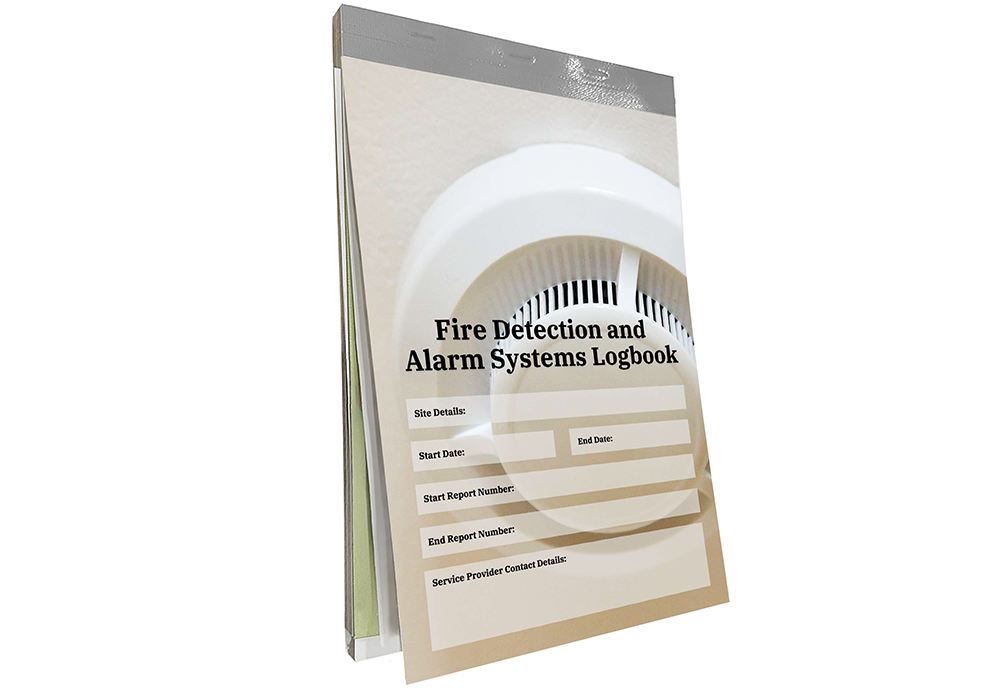
The Fire Detection and Alarm Systems logbook provides structured routine service records based on the relevant requirements of AS 1851—2012 (Incorporating Amendment No. 1), Section 6.
The logbook supports routine service record keeping for:
- Fire Detection & Alarm Systems
- Smoke & Heat Alarms
- Smoke Hazard Management – Detection & Control Functions
- Fire Detection & Control Equipment Associated with Special Hazard Systems
These last two categories are important to understand correctly. The logbook records the applicable electrical detection, indication and control functions associated with Smoke Hazard Management and Special Hazard Systems. It does not replace routine service records for the complete mechanical smoke-control system or the complete special hazard suppression system.
The product provides Monthly, Six-Monthly, Yearly and Five-Yearly record sections depending on the applicable system, together with detector test records, battery records, occupant warning measurements, system interface checks, defects, corrective actions and completed repairs.
It is designed as a practical fire logbook, fire alarm logbook, service record logbook and routine service record logbook for documenting applicable inspection, testing, preventive maintenance and survey activities.
What Does the Fire Detection and Alarm Systems Logbook Cover?
AS 1851—2012 Section 6 covers Fire Detection and Alarm Systems and includes several related detection, alarm and control functions.
The Fire Detection and Alarm Systems logbook brings together four related areas:
| System / Function | Included |
|---|---|
| Fire Detection & Alarm Systems | ✓ |
| Smoke & Heat Alarms | ✓ |
| Smoke Hazard Management – Detection & Control Functions | ✓ |
| Fire Detection & Control Equipment Associated with Special Hazard Systems | ✓ |
The distinction between detection/control equipment and the actual system being controlled is important.
For example, the logbook contains Section 6 records for electrical detection and control equipment associated with a special hazard suppression system, including relevant Local Control Station functions, monitored conditions, actuator circuits and release-control functions.
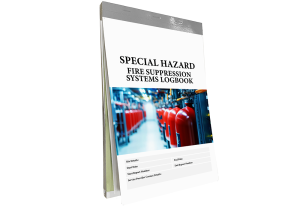
However, it does not replace the dedicated Special Hazard Fire Suppression Systems logbook used for applicable gaseous, aerosol and water mist suppression system components such as storage containers, extinguishing agent, pipework, nozzles and suppression-system servicing.
Similarly, the Smoke Hazard Management records in this Fire Detection logbook relate to detection, indication and control functions. Broader servicing of fans, dampers and mechanical smoke-control equipment is covered by the Mechanical Services Logbook – Fire/Smoke Control Features.
AS 1851 Section 6 – Fire Detection and Alarm Systems
Section 6 of AS 1851—2012 provides routine service schedules for fire detection, alarm and related systems.
The activities include combinations of:
- inspection
- functional testing
- preventive maintenance
- battery testing
- detector testing
- system interface testing
- survey activities
- service records.
The individual service frequency depends on the particular system or equipment being serviced.
This is why the Fire Detection and Alarm Systems Logbook contains different schedules for Fire Detection & Alarm Systems, Smoke & Heat Alarms and related Section 6 detection/control functions rather than applying every frequency to every system.
Routine Service Frequency Summary
The Fire Detection and Alarm Systems logbook brings together several applicable AS 1851—2012 Section 6 routine service schedules.
Fire Detection & Alarm Systems Logbook – Scope Summary
| System / Equipment | Monthly | Six-Monthly | Yearly | Five-Yearly |
|---|---|---|---|---|
| Fire Detection & Alarm Systems | ✓ | — | ✓ | ✓ |
| Smoke & Heat Alarms | — | ✓ | ✓ | — |
| Smoke Hazard Management – Detection & Control Functions | — | — | ✓ | — |
| Special Hazard Systems – Fire Detection & Control Equipment | — | ✓ | ✓ | — |
| Special Hazard Fire Suppression System | — | — | — | — |
| Mechanical Fire & Smoke Control Equipment | — | — | — | — |
| Emergency Warning & Intercom Systems (EWS/EIS) | — | — | — | — |
This frequency table reflects the actual structure of the Fire Factory Australia logbook. The main Fire Detection & Alarm System has Monthly, Yearly and Five-Yearly records; Smoke & Heat Alarms have Six-Monthly and Yearly records; Smoke Hazard Management detection/control functions are recorded yearly; and applicable Special Hazard detection/control equipment has Six-Monthly and Yearly records.
Monthly Fire Detection & Alarm System Service Records
The Monthly Service Record provides routine checks of the primary Fire Detection and Alarm System.
The logbook includes records relating to:
- external alarm / bell / strobe
- designated building entry point indication
- Fire Indicator Panel (FIP)
- Sub-Indicator Panel (SIP)
- repeater panels
- Fire Brigade Panel (FBP)
- mimic panels
- Fire Fan Control Panel (FFCP)
- panel accessibility and visibility
- dust and contaminants
- panel-door labelling
- Manual Call Point replacement elements
- vented battery enclosures
- simulated alarm conditions
- visual and audible indications
- Alarm Signalling Equipment
- occupant warning system activation
- Visual Warning Devices
- isolate / disable functions
- monitoring-service indications
- filament-type visual indicators
- zone block plans
- supplementary drawings.
These routine records provide a chronological history of the basic operational condition of the installed fire alarm system.
Fire Indicator Panel & Control Equipment Records
The Fire Indicator Panel (FIP) is a central component of many fire detection systems.
The Monthly Service Record provides for inspection of applicable:
- FIP
- SIP
- repeater panel
- Fire Brigade Panel
- mimic panel
- FFCP.
The equipment is checked for conditions such as:
- visibility
- accessibility
- contamination
- identification and labelling.
This makes the Fire Detection and Alarm Systems useful as both a broader fire alarm service record logbook and an FIP service record logbook.
Monthly Fire Alarm Function Test
The Monthly Service Record includes simulation of a fire alarm condition.
Applicable checks include confirmation that:
- visual alarm indications operate
- audible alarm indications operate
- external alarms activate
- monitored systems activate the Alarm Signalling Equipment
- an alarm condition from a SIP is indicated at the FIP
- the occupant warning system activates
- applicable Visual Warning Devices activate.
This provides a regular recorded verification of the basic fire alarm response.
Smoke & Heat Alarm Six-Monthly Service Records
The Fire Detection and Alarm Systems logbook includes a dedicated Six-Monthly Smoke & Heat Alarm service schedule.
The record includes inspection or testing relating to:
- physical damage
- excessive dust or contamination
- battery indication
- mains-power indication
- alarm test function
- audible alarm activation
- other sensory warning devices where fitted.
This section is specifically for applicable smoke and heat alarm routine service records.
Yearly Smoke & Heat Alarm Service Records
The yearly schedule provides more comprehensive servicing of Smoke & Heat Alarms.
It includes:
- testing interconnected alarms
- testing 100% of applicable smoke alarms
- testing 100% of applicable heat alarms
- testing other sensory warning devices
- cleaning alarms
- checking battery replacement requirements
- replacing alarms where service life has expired
- checking alarm spacing
- checking alarm location.
The combination of Six-Monthly and Yearly records allows an ongoing service history to be retained within the same Fire Detection logbook.
Fire Detection & Control Equipment Associated with Special Hazard Systems – Six-Monthly
The logbook includes a dedicated Six-Monthly Section 6 schedule for fire detection and control equipment associated with Special Hazard Systems.
This does not mean the Fire Detection logbook covers the complete Special Hazard Fire Suppression System.
The Six-Monthly records relate to electrical detection and control functions including applicable:
- Local Control Stations (LCS)
- Visual Warning Devices
- discharge inhibit controls
- auto/manual controls
- suppression discharge prevention
- normal discharge sequence reset
- LCS and FIP indications
- audible indications
- manual discharge controls
- manual initiate controls
- service switches
- discharge actuator circuit faults
- lock-off valve indications
- manual inhibit controls
- system-inoperative warning indications
- supervised actuator circuits
- actuator functions
- system logic.
These activities form the detection and control side of the Special Hazard System.
For routine servicing of the actual suppression system—including applicable gas cylinders, extinguishing agent, pipework, manifolds, nozzles, aerosol generators and water mist equipment—use the Special Hazard Fire Suppression Systems logbook.
Yearly Fire Detection & Alarm System Service Records
The Yearly Fire Detection and Alarm System schedule provides significantly more detailed inspection and testing than the monthly service.
Records include activities relating to:
- Manual Call Points
- panel switches
- keypads
- visual indicators
- alphanumeric displays
- battery capacity
- fire detectors
- alarm-zone indication
- occupant warning systems
- Sound Pressure Levels
- alarm acknowledgement facilities
- alarm investigation facility
- battery discharge testing
- detector and equipment service life
- changes to the fire detection system
- detector suitability
- nuisance alarm conditions
- cabling
- conduits
- junction boxes
- Control and Indicating Equipment
- system interfaces.
Fire Detector & Sampling Point Testing
The Yearly Service Record includes fire detector testing, with a dedicated Fire Detector & Sampling Point Test Record.
The logbook provides fields for:
- Date
- Loop No.
- Alarm Zone
- detector/sampling-point identification
- Detector Type
- Lower Response Limit
- Upper Response Limit
- Reference.
This provides a separate structured area for maintaining detailed detector-test records.
Detector testing is associated with the applicable requirements of Appendix G of AS 1851—2012.
Where detectors form part of the electrical detection system associated with a Special Hazard System, those detector-related Section 6 activities remain detection-system records and should not be confused with servicing the suppression equipment itself.
Occupant Warning System Sound Pressure Level Records
The Yearly Service Record contains a dedicated area for Occupant Warning System Sound Pressure Level measurements.
Fields include:
- Location of Reference Point
- Required SPL
- Measured SPL
- dBA.
These records provide historical reference measurements that can be compared during subsequent routine servicing.
Battery Capacity Records
Battery condition and capacity are important parts of Fire Detection and Alarm System routine servicing.
The logbook provides dedicated battery records for:
Battery Capacity
- Quiescent Current – IQ
- Maximum Alarm Current – IA
- Calculated Capacity – Ah
- Installed Capacity – Ah
Battery Condition
- Date Last Replaced
or - Test Load Current – A
- Final Test Voltage – V.
These fields allow battery capacity calculations and battery-condition information to be retained as part of the ongoing fire alarm service history.
Smoke Hazard Management – Detection & Control Functions
The Fire Detection and Alarm Systems logbook contains yearly records for applicable detection and control functions associated with Smoke Hazard Management Systems.
The schedule includes checks relating to:
- FFCP remaining in fire mode after initiation from the FIP
- manual ON-AUTO-OFF override operation
- airflow fault indication
- air-handling equipment interconnecting cable open-circuit fault
- interconnecting cable closed-circuit fault
- electricity phase-fail indication
- fan-running indication
- fan-stopped indication
- fan-fault indication.
These are control and indication functions only.
The Fire Detection logbook does not replace routine service records for the mechanical components of the smoke-control system.
For servicing fans, dampers, fire and smoke curtains, air-control dampers and other mechanical fire/smoke control equipment, use the Mechanical Services Logbook – Fire/Smoke Control Features.
Fire Detection & Control Equipment Associated with Special Hazard Systems – Yearly
The Yearly Section 6 service record also includes applicable detection and control functions associated with Special Hazard Systems.
The logbook includes records for:
- suppression-system status monitoring
- container-level monitoring
- pressure-switch monitoring
- pump-controller monitoring
- electrical directional valves
- system discharge sequence
- discharge time delay
- agent-release detection
- agent-release indication at the FIP.
Again, these are the electrical monitoring, detection and control functions associated with the Special Hazard System.
They should not be described as full Special Hazard suppression system servicing.
For complete Section 7 suppression-system records, use the Special Hazard Fire Suppression Systems logbook.
Fire System Interface Records
Fire Detection and Alarm Systems frequently interface with other building fire safety systems.
The Yearly Service Record provides a structured interface checklist including:
- Fire Door Release
- Security Door Release
- Roof Vents
- Warning System / Intercom
- Plant Shutdown
- Fuel Shut-off
- Elevator Override
- Exit Pressurisation
- Smoke Control
- Smoke Exhaust
- Air Handling / HVAC
- CIE Fault Indication
- Special Hazards
- Notification / Alert Systems
- other applicable interfaces.
These records assist in documenting whether required transmission paths and corresponding interfaced systems respond as intended during testing.
Annual Survey
The Fire Detection and Alarm System logbook also includes an Annual Survey section.
The survey considers changes such as:
- building additions or alterations
- changes in occupancy
- changes to fire safety systems or equipment
- major repairs.
The purpose is to identify changes that could potentially affect the performance of the installed Fire Detection and Alarm System.
Five-Yearly Fire Detection & Alarm System Service Records
The Fire Detection and Alarm Systems logbook contains a dedicated Five-Yearly Fire Detection & Alarm System record.
The schedule includes:
- supervised input-circuit testing
- supervised output-circuit testing
- simulated circuit faults
- FIP visual and audible fault indications
- monitoring fault transmission
- short-circuit isolation functions
- CIE power-supply supervision
- collective detection circuits
- functional system interface testing
- loudspeaker circuit impedance
- monitoring-link testing
- alarm verification facilities.
The Five-Yearly schedule applies to the Fire Detection and Alarm System itself; it should not be interpreted as a Five-Yearly service schedule for the Smoke Hazard Management or Special Hazard detection/control sections listed elsewhere in this logbook.
Occupant Warning System Speaker Circuit Impedance
The Five-Yearly Fire Detection & Alarm System record also provides a dedicated speaker-circuit table.
Fields include:
Circuit | Required Impedance | Measured Impedance
This allows the measured impedance of applicable loudspeaker circuits to be recorded and compared with reference or previous values.
Recording Defects, Corrective Actions & Completed Repairs
The service records provide dedicated fields for:
Item No. | Defect Type | Results / Comments | Corrective Action | Completed Repairs
This enables technicians and service providers to record not only whether an activity has passed or failed but also:
- the defect identified
- relevant comments
- required corrective action
- whether repairs have been completed.
A separate Notes section also provides space for:
- Associated Logbook Sheet ID / Report No.
- Activity Performed
- additional defect and corrective-action records.
Why Are Fire Detection & Alarm Service Records Important?
Fire Detection and Alarm Systems often interact with multiple fire safety systems within a building.
A structured fire alarm routine service record logbook helps maintain a chronological record of:
- FIP inspections
- alarm simulation
- detector testing
- Manual Call Point testing
- smoke and heat alarm servicing
- battery capacity
- battery condition
- occupant warning measurements
- system interfaces
- Smoke Hazard Management detection/control functions
- Special Hazard detection/control functions
- monitored signals
- system faults
- defects
- corrective actions
- Five-Yearly testing.
Maintaining these records provides a practical history of the routine servicing carried out on the system.
Related Logbooks
Some systems appearing in a Fire Detection & Alarm record also require separate system-specific routine service records.
Special Hazard Fire Suppression Systems
The Fire Detection logbook covers applicable electrical fire detection and control equipment associated with Special Hazard Systems.
It does not cover the complete suppression-system servicing.
For applicable gaseous, fixed aerosol and open nozzle water mist suppression-system routine service records, use the Special Hazard Fire Suppression Systems logbook.
Mechanical Fire & Smoke Control Systems
The Fire Detection logbook contains certain Smoke Hazard Management detection and control functions.
For the physical mechanical equipment—including applicable fans, dampers and other mechanical fire/smoke control features—use the Mechanical Services Logbook – Fire/Smoke Control Features.
Emergency Warning & Intercom Systems
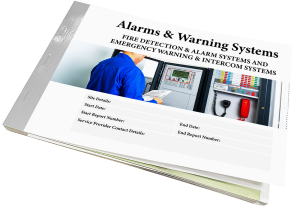
Where a site has a complete Emergency Warning and Emergency Intercom System requiring dedicated service records, Fire Factory Australia also provides the Emergency Warning & Intercom Systems logbook.
For sites requiring both Fire Detection and Emergency Warning/Intercom records within one book, see the Fire Detection & Alarm Systems and Emergency Warning & Intercom Systems combined logbook.
AS 1851—2012 Requirements in NSW
From 13 February 2026, AS 1851—2012 applies in NSW to applicable essential fire safety measures in new and existing Class 1b and Class 2 to Class 9 buildings, unless an applicable Performance Solution specifies an alternative maintenance basis.
This does not mean every building in those classifications contains every system discussed in this article.
For Fire Detection and Alarm Systems, the requirements are relevant where the applicable system or equipment forms part of an essential fire safety measure for the particular building.
NSW Government – Building fire safety requirements under AS 1851-2012
Which Buildings Are Affected in NSW?
Applicable AS 1851 routine servicing may relate to essential fire safety measures installed in new and existing:
| Building Class | Typical Examples |
|---|---|
| Class 1b | Small boarding houses, guest houses, hostels and similar accommodation |
| Class 2 | Apartment buildings |
| Class 3 | Hotels, larger boarding houses and other residential accommodation |
| Class 5 | Office buildings |
| Class 6 | Shops, restaurants and cafés |
| Class 7 | Car parks and warehouses |
| Class 8 | Factories and laboratories |
| Class 9 | Hospitals, schools and assembly buildings |
The applicable measures vary from building to building.
Building owners should refer to their Fire Safety Schedule (FSS) and other applicable fire safety documentation to identify the fire safety measures installed and required to be maintained.
NSW Government – Responsibilities of building owners under AS 1851-2012
Keeping Fire Detection Service Records in NSW
Structured service records provide an accessible history of the Fire Detection and Alarm System.
Depending on the installation, these may include:
- Monthly Fire Detection and Alarm servicing
- Six-Monthly Smoke & Heat Alarm records
- Six-Monthly Special Hazard detection/control records
- Yearly system testing
- detector test records
- battery records
- annual survey information
- Five-Yearly tests
- interface testing
- defects
- corrective actions.
Current NSW requirements also place record-keeping responsibilities on building owners for applicable fire safety documentation.
NSW Government – Responsibilities of building owners under AS 1851-2012
Who Should Carry Out Fire Detection & Alarm System Servicing?
Fire Detection and Alarm Systems can include specialised:
- fire protection equipment
- electrical equipment
- communication systems
- detection systems
- monitoring equipment
- control equipment
- system interfaces.
The required competency and licensing depend on the particular activity being undertaken.
Building owners and responsible entities should ensure applicable routine service activities are performed by suitably competent persons and appropriately licensed personnel where required.
NSW Government – Good Practice Guide for Implementing AS 1851-2012
About the AS 1851 Fire Detection & Alarm System Routine Service Record Logbook
The Fire Detection and Alarm Systems logbook is a dedicated fire logbook, fire alarm logbook, fire detection logbook, service record logbook and routine service record logbook for maintaining applicable Fire Detection and Alarm System service history.
Designed around the relevant requirements of AS 1851—2012 Section 6, it supports structured routine service recording for:
- Fire Detection & Alarm Systems
- Smoke & Heat Alarms
- Fire Indicator Panels
- Sub-Indicator Panels
- Fire Brigade Panels
- Fire Detectors
- Sampling Points
- Manual Call Points
- Alarm Signalling Equipment
- Occupant Warning Systems
- Visual Warning Devices
- batteries
- system interfaces
- Fire Fan Control Panels
- Smoke Hazard Management detection/control functions
- Fire Detection & Control Equipment associated with Special Hazard Systems.
The logbook includes applicable:
- Monthly Fire Detection & Alarm System records
- Six-Monthly Smoke & Heat Alarm records
- Six-Monthly Special Hazard detection/control records
- Yearly Fire Detection & Alarm System records
- Yearly Smoke & Heat Alarm records
- Yearly Smoke Hazard Management detection/control records
- Yearly Special Hazard detection/control records
- Five-Yearly Fire Detection & Alarm System records
- Fire Detector & Sampling Point Test Records
- battery capacity records
- battery condition records
- Occupant Warning System SPL records
- speaker circuit impedance records
- interface records
- defects
- corrective actions
- completed repairs.
Importantly, Special Hazard detection/control records do not replace the Special Hazard Fire Suppression Systems logbook, and Smoke Hazard Management detection/control records do not replace the Mechanical Services Logbook – Fire/Smoke Control Features.
For Australian fire protection contractors, technicians, building managers and facility managers, this product provides one structured location for applicable Section 6 service records.
Designed to support routine service and record keeping in accordance with the relevant requirements of AS 1851—2012 Section 6.
Frequently Asked Questions
What is a Fire Detection and Alarm Systems logbook?
It is a routine service record logbook designed to document applicable inspection, testing, preventive maintenance and survey activities associated with Fire Detection and Alarm Systems under AS 1851—2012 Section 6.
What systems and functions are included?
The logbook includes Fire Detection & Alarm Systems, Smoke & Heat Alarms, Smoke Hazard Management detection/control functions, and Fire Detection & Control Equipment associated with Special Hazard Systems.
Does the Fire Detection logbook cover the complete Special Hazard Fire Suppression System?
No. It covers only the applicable fire detection and control equipment associated with Special Hazard Systems under Section 6.
For the actual suppression system—including applicable storage containers, extinguishing agent, pipework, nozzles, aerosol generators and water mist equipment—use the Special Hazard Fire Suppression Systems logbook.
Does this logbook cover mechanical Smoke Hazard Management equipment?
Not completely. It records applicable detection, indication and control functions associated with Smoke Hazard Management.
Mechanical fire and smoke control equipment is covered separately by the Mechanical Services Logbook – Fire/Smoke Control Features.
What service frequencies are included for the Fire Detection & Alarm System itself?
The main Fire Detection & Alarm System records are Monthly, Yearly and Five-Yearly.
How often are Smoke & Heat Alarm records provided?
The logbook includes Six-Monthly and Yearly Smoke & Heat Alarm service records.
How often are Special Hazard detection/control records included?
The Fire Detection logbook contains Six-Monthly and Yearly records for applicable Fire Detection & Control Equipment associated with Special Hazard Systems.
How often are Smoke Hazard Management detection/control records included?
The dedicated Smoke Hazard Management detection/control functions in this logbook are recorded under the Yearly schedule.
Does the logbook include fire detector testing?
Yes. A dedicated Fire Detector & Sampling Point Test Record is provided for applicable detector testing.
Does it include battery records?
Yes. The logbook provides records for battery capacity and battery condition, including currents, calculated/installed capacity, replacement date, load current and final test voltage.
Does it include Occupant Warning System testing?
Yes. The Yearly record includes Occupant Warning System testing and SPL measurements, while the Five-Yearly Fire Detection record includes applicable speaker-circuit impedance records.
Does it include system interface testing?
Yes. Applicable Yearly and Five-Yearly records include functional verification of system interfaces.
Does using this logbook automatically make a system compliant with AS 1851—2012?
No. The logbook is a structured record-keeping tool. Compliance depends on the installed system, approved design, actual routine service work performed, test results, defects and rectification, competent personnel and applicable regulatory requirements.
Conclusion
The Fire Detection and Alarm Systems logbook provides a comprehensive structured format for documenting applicable routine servicing of Fire Detection and Alarm Systems under AS 1851—2012 Section 6.
It combines records for the primary Fire Detection & Alarm System with Smoke & Heat Alarms, Smoke Hazard Management detection/control functions and Fire Detection & Control Equipment associated with Special Hazard Systems.
The distinction between these related functions and the complete systems they interface with is important.
For complete Special Hazard suppression-system routine service records, use the Special Hazard Fire Suppression Systems logbook.
For mechanical smoke-control equipment, use the Mechanical Services Logbook – Fire/Smoke Control Features.
With Monthly, Six-Monthly, Yearly and Five-Yearly sections applied according to the relevant system schedule, together with detector testing, battery records, interface checks, measurements, defects and corrective actions, the Fire Detection logbook provides a detailed ongoing fire alarm service history.
Designed to support routine service and record keeping in accordance with the relevant requirements of AS 1851—2012 Section 6.
Our Fire Safety Logbooks
Explore our complete range of Fire Safety Logbooks for fire protection routine service, testing, inspection and maintenance records.
- Fire Detection and Alarm Systems
- Emergency Warning & Intercom Systems
- Fire Detection & Alarm Systems and Emergency Warning & Intercom Systems
- Automatic Fire Sprinkler System Logbook – Wet Pipe Sprinkler and Jacking Pump
- Automatic Fire Sprinkler System Logbook – Dry-Pipe / Pre-Action, Deluge & Water Spray
- Special Hazard Fire Suppression Systems
- Fire Pumpset Logbook – Sprinkler & Hydrant Pumps (Diesel & Electric) & Jacking Pumps
- Diesel Fire Pumpset Logbook – Sprinkler & Hydrant Pumps & Jacking Pumps
- Electric Fire Pumpset Logbook – Sprinkler & Hydrant Pumps & Jacking Pumps
- Hose Reel & Jacking Pumps Logbook
- Fire Hydrant Systems & Jacking Pumps Logbook
- Water Storage Tanks Logbook
- Routine Service Logbook – Delivery Lay Flat Hose, Fire Hose Reels, Fire Extinguishers & Fire Blankets
- Passive Fire Logbook
- Mechanical Services Logbook – Fire/Smoke Control Features
- Emergency and Exit Lighting Maintenance Logbook